

Access isn’t enough: why universities must make the hidden curriculum visible
Matched: AI
Universities have increased access for underrepresented students, but gaps in continuation, completion and graduate outcomes persist. The "hidden curriculum" — unwritten expectations around academic culture, networking and communication — disadvantages first-generation, mature and neurodivergent students who lack prior institutional knowledge. Rather than assuming familiarity, universities should make expectations explicit through transparent assessment criteria, embedded induction and peer mentoring focused on navigating university culture.

France school protests escalate into ‘urban violence’ as PM calls crisis cabinet meeting
Matched: AI
French high school students protesting over long hours, teacher shortages and poor facilities have escalated into widespread unrest, with around 900 demonstrations and blockades reported nationwide. Prime Minister Sébastien Lecornu called an emergency cabinet meeting and ordered ministers to cancel travel plans. Many schools are switching to online classes to protect staff and students amid what the government has described as "urban violence."

Most Academics Haven't Used AI to Write but Think Limited Use Is OK, Chronicle Survey Finds
Matched: AI
A Chronicle of Higher Education survey found most academics have not used AI to write their work, but many consider limited use acceptable. Opinions on what constitutes appropriate use varied across disciplines. The findings reflect ongoing uncertainty within higher education about where to draw boundaries around AI assistance in academic writing and research.

Higher Ed’s Path to Advanced Cybersecurity Maturity
Matched: AI
Higher education IT leaders are urged to move beyond reactive cybersecurity toward structured maturity, using frameworks like NIST's Cybersecurity Framework and FINRA guidance adapted for colleges and universities. Key priorities include zero-trust implementation, scalable and resilient systems, and audit readiness — balancing stronger security with the agility and cost-efficiency that academic institutions require.

Finding the Right Disaster Recovery Strategy for Higher Ed
Matched: AI
Higher education institutions are prioritizing disaster recovery as cyberattacks and unplanned downtime threaten operations. Immutable backups are now considered essential, not optional. However, cost concerns and limited IT staff capacity remain barriers. A Veeam survey found 92% of IT professionals want backup solutions better tailored to their needs, highlighting a gap between the importance institutions place on disaster recovery and their ability to implement effective strategies.

‘Who’s looking after the researchers?’ The missing conversation in research culture
Matched: AI
Researchers studying difficult topics like domestic abuse, poverty, and trauma face significant emotional burdens that universities rarely address. A Warwick project found many researchers carry distressing experiences beyond working hours, yet receive little preparation for this. Early career researchers often fear admitting struggles. The authors argue researcher wellbeing should be embedded in ethics processes, training, and institutional strategy — not treated as optional.
How Colleges Are Using Technology To Attract Students on Campus Visits
Matched: AI
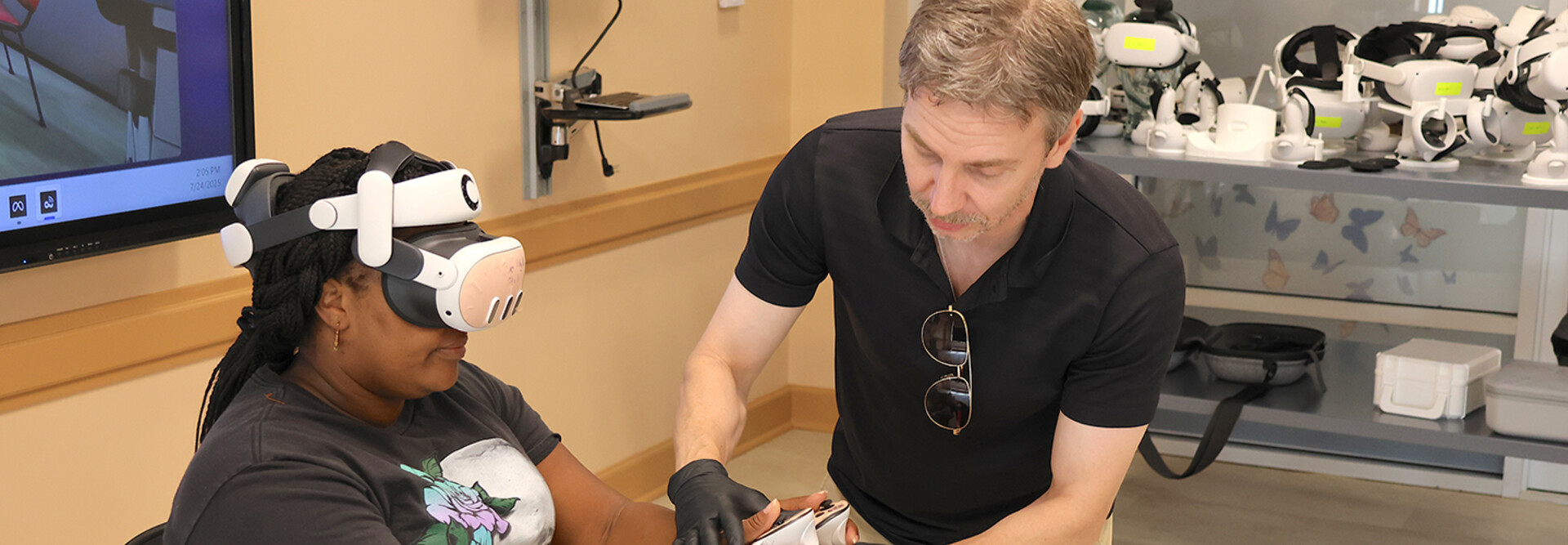
Colleges are increasingly using technology to impress prospective students during campus visits, which 86% of enrollment leaders say are the defining factor in securing enrollment. When IT and admissions teams collaborate, institutions can showcase their technical capabilities as a recruitment tool. Smaller schools rely on campus visits most heavily, making these first impressions especially critical to their enrollment strategies.

How to Assign Research Papers Again
Matched: AI
Two political science professors argue that research paper assignments remain valuable but require adaptation in the AI era. They suggest three approaches: requiring students to submit drafts and process documentation, conducting brief oral follow-ups where students discuss their written work, and designing more specific, personalized prompts that are harder for AI to address generically. The goal is restoring confidence in authentic student writing.

AI is everywhere. Expertise is the difference.
Matched: AI, Artificial Intelligence
Ellucian argues that generic AI falls short for tertiary education because institutions operate through complex policies, governance, compliance rules, and workflows that pattern-based AI lacks context to navigate. The company promotes "institutional intelligence" — purpose-built AI trained on how universities and colleges actually operate — to support administrative processes, student services, and decision-making while maintaining governance and compliance alignment.

Leading through disruption
Matched: AI
Higher education leaders face compounding pressures including financial restructuring, course closures, AI integration, and employer scrutiny. Research shows redundancies damage morale while leadership turnover accelerates. Drawing on Heifetz and Linsky's adaptive leadership framework, the article argues institutions focus too heavily on technical fixes while neglecting adaptive challenges — the human, cultural, and behavioural change required. Leaders are urged to name adaptive work explicitly in change plans and build sustainable support structures alongside operational ones.

Review of William Whyte: The University: A History in Stone, Silk and Blood
Matched: AI
William Whyte's book traces university history through its physical and material dimensions, exploring how institutions evolved from mobile medieval gatherings to established bureaucracies. Themes include recurring critiques of universities across centuries, the impact of new technologies, expansion pressures, and persistent forecasts of their demise — from the printing press to MOOCs — while universities continue to endure and adapt.

Is it time to ditch AI detection tools?
Matched: AI, Artificial Intelligence
AI detection tools used in education are unreliable and should be abandoned, argues a Charles Sturt University researcher. Even low false-positive rates can wrongly flag thousands of students for misconduct, causing significant stress. Tools also struggle with real-world contexts where AI assistance blurs into human writing. Instead, educators should redesign assessments to include supervised tasks that genuinely measure student learning outcomes.
New HEPI and CUP&A Report: ‘Soft Power Index 2026’
Matched: AI
The 2026 HEPI/Cambridge University Press & Assessment Soft Power Index finds the US and UK together educated 126 current world leaders, with the US leading at 66 and the UK at 60. France ranks third with 29. Harvard, Oxford and Sandhurst top the institutional rankings. The 10th anniversary edition also examines how recent UK policy changes on international students could affect the country's long-term global influence.

As more Australian universities use AI to mark students’ work, is it creating a ‘slop-cycle’?
Matched: AI, Artificial Intelligence
Australian universities are increasingly using AI to help mark student assignments, raising concerns about a damaging feedback loop. Academics warn that if AI grades work, students may use AI to write it, producing low-quality "slop" that AI then evaluates — a cycle that could undermine genuine learning. Critics say the trend poses an existential threat to higher education, though institutions are divided on how to respond.

WEEKEND READING: When prestige trumps skills: rethinking excellence in higher education
Matched: AI
Professor David Mba argues that England's skills system overvalues research-intensive universities as the benchmark for excellence, while undervaluing teaching-focused institutions that train nurses, teachers and other professionals. Using the NHS Graduate Guarantee as a starting point, he contends that producing qualified graduates is only part of workforce development — employment, deployment and retention matter equally. He calls for a broader definition of higher education excellence that recognises regional workforce contribution alongside research output.

WEEKEND READING: Points of convergence: the evolution of the UK Quality Code
Matched: AI
QAA's Dr Andy Smith traces the evolution of the UK Quality Code from the 1997 Dearing Report through successive iterations. Beginning as a 258-page, 175-precept Code of Practice, it was streamlined to a single A4 page in 2018 before expanding to an 18-page, 12-principle framework in 2024. The latest edition is now fully supported by nine newly published Advice & Guidance collections, completing a sector-owned resource co-created with colleagues across all four UK nations.

DNA database of UK dogs could help police collar criminals
Matched: AI
UK scientists are developing a DNA database of dogs that could help police investigations. Canine material such as hair and saliva is often found at crime scenes but rarely fully analysed. The database could help identify specific breeds or individual dogs linked to crimes, or eliminate animals as suspects, offering investigators potentially valuable new leads.

‘I have a blowtorch at uni’: what do students eat apart from pesto pasta?
Matched: AI
University students are often stereotyped as surviving on pesto pasta and frozen pizza, but many develop surprisingly sophisticated cooking habits. A journalist reflecting on 20 years since starting university notes that student food stereotypes have shifted over time, and that for many, university becomes a formative period for food and cooking — with some students finding time and money for dishes like crème brûlée and duck eggs.

Could AI Be Better at Peer Review Than Humans?
Matched: AI
A journal editor reflects on AI's potential role in peer review, noting it could address chronic problems like reviewer shortages, delays, and inconsistency. AI can quickly assess clarity, methodology, and statistical errors without fatigue or bias. However, concerns remain about AI missing nuanced scientific judgment, rewarding conventional thinking, and lacking accountability. The author concludes AI may best serve as a supplement to, not replacement for, human reviewers.

AI-Edited Stanford Ad Violated University Policy, Official Says
Matched: AI
Stanford University has determined that an AI-edited advertisement violated university policy, according to an official. The ad was modified using artificial intelligence tools without proper authorization or oversight, breaching internal guidelines governing the use of such technology. The incident has prompted the university to review its policies around AI use in official communications and promotional materials.

AI Isn’t Making Comms Teams’ Jobs Any Easier
Matched: AI
Despite expectations that AI would reduce workload, many communications professionals say it's actually created more work. Teams must now verify AI-generated content, navigate new ethical questions, and manage AI-related reputational risks. Experts argue communicators should help shape internal AI policies rather than simply adapt to them, as their expertise in messaging, trust, and audience understanding is critical to responsible AI adoption.

Silicon Valley AI Academy Seeks ‘Main Character’ Students
Matched: AI
Andreessen Horowitz is launching an unaccredited academy aimed at young people, teaching them to thrive in the AI era at costs comparable to Ivy League tuition. The program emphasizes self-directed, ambitious students. Critics have dismissed it as a vanity project reflecting the firm's broader ideological agenda, while supporters see it as a practical alternative to traditional higher education.

Why Does an AI Faculty Shortage Exist? It’s Complicated.
Matched: AI
Universities are struggling to hire AI faculty because they can't compete with tech industry salaries, which can reach several times what academia offers. Demand for AI expertise has surged while the pipeline of qualified PhD graduates remains limited. Many researchers also prefer industry labs for resources and fewer administrative burdens. Some schools are experimenting with joint appointments and adjunct roles to fill gaps.

AI Writing Detection: A Losing Battle Worth Fighting
Matched: AI
Tools designed to detect AI-generated text are proving unreliable, frequently flagging human writing as machine-made and missing actual AI content. Experts disagree on whether the technology can ever be accurate enough to be useful. Despite flaws, many educators and institutions continue using detectors, arguing that imperfect tools still create some deterrent, even as critics warn the false positives cause real harm to students.

AI Bots Can Seem Sentient. Students Need Guardrails.
Matched: AI
Increasingly lifelike AI chatbots are raising concerns among educators about students forming emotional attachments or mistaking AI responses for genuine understanding. Experts argue schools need clear guidelines on appropriate AI use, teaching students to think critically about how these tools work, recognize their limitations, and avoid over-relying on them for emotional support or intellectual tasks.