
Multi-Agentic EdTech: The Promise and the Costs
Matched: Agentic, AI
Multi-agentic AI is generating hype in EdTech, but the concept is simpler than buzzwords suggest: multiple AI agents, each with defined roles, passing work sequentially like a team. The real concern is cost—each agent consumes tokens for context, reasoning, and output, and errors compound across the chain unpredictably. In education, where "humans in the lead" matters, elaborate automation risks cognitive surrender over genuine support. Niche applications exist, but widespread adoption faces serious variable cost barriers.
Today’s AI is Economically Unsustainable for Education
Matched: Agentic, AI
Current AI economics are unsustainable for education. AI companies aren't yet profitable, and usage-based API costs are wildly variable — some firms have accidentally spent hundreds of millions in a month. EdTech SaaS depends on fixed costs to fit institutional budgets; variable AI token pricing breaks that model entirely. Expect constrained AI features in platforms rather than open-ended tools, with true broad adoption likely still years away.

This is not about the Canvas Hack
Matched: AI
The Canvas hack represents a sophisticated ransomware attack on education by organized cybercriminals who previously targeted hospitals. The attackers used multiple vectors including social engineering, and Instructure was SOC 2 compliant. The author, affiliated with 1EdTech, stresses that LTI 1.3 is secure; deprecated LTI 1.1 wasn't involved in the attack and shouldn't be used. Broad insinuations that LTI standards are generally insecure are wrong and counterproductive. The sector must respond collectively.
e-Literacy and Changing Times: Emerging Themes for Learning Impact
Matched: AI
1EdTech CSO Michael Feldstein and Claude Opus discuss why standards bodies matter beyond technical specs. Using Conway's Law—that software reflects the communication structures that produced it—they argue EdTech's failures stem from broken collaboration, not bad intentions. They explore how 1EdTech is shifting toward convening broader conversations around AI, competency standards, learner records, and global interoperability, treating community dialogue as upstream of any specification.

Beyond the Grade: Dr. Susan Blum’s Alternative Assessment Ideas
Matched: AI
Dr. Susan Blum's ungrading framework offers four alternative assessment approaches: specifications-based grading using pass/fail thresholds, labor-based grading rewarding effort over innate ability, contract grading giving students agency over outcomes, and portfolio-based learning capturing cumulative progress. The article also outlines practical implementation steps, including low-stakes knowledge checks, self-reflection activities, and using education technology like Top Hat to reduce instructor workload while supporting these methods.

Claude Interviews Me About How AI Works
Matched: AI, Artificial Intelligence
A blogger returns to AI-dialogue-format posts, this time discussing his academic theory of how transformers work with Claude Opus. His "Conservation of Predictive Meaning" theory proposes that AI models build up useful distinctions rather than narrowing down from vast possibility spaces, connecting transformer mechanisms like softmax to a 1950s psychometric axiom. The conversation demonstrates both the theory's claims and its limits, while modeling how custom prompting can scaffold careful reading.

The 2026 Higher Ed Summer Reading List + Essential Podcast Recommendations
Matched: AI
A curated 2026 summer reading and podcast list for higher education instructors covers topics including online teaching, ungrading, student mental health, memory science, and authentic presence in the classroom. Eight recommended books feature authors like Flower Darby, Susan Blum, and Sarah Rose Cavanagh. Five podcasts—including Top Hat's Higher Listenings and Teaching in Higher Ed—offer accessible, research-backed strategies for improving teaching practice.

The Missing Pieces of the Skills Economy are the Skills and the Economy
Matched: AI
The "skills economy" is gaining momentum due to AI, rising college costs, and shifting labor markets, but lacks a shared definition. Skills aren't fixed widgets in a taxonomy — their value is contextual and changes over time. Three distinct meanings of "skill" (economic value, institutional accountability, and foundational learning components) are routinely conflated. What's missing isn't better skill definitions but infrastructure allowing two parties to assess whether a skills match justifies a transaction, supported by portable, evidence-backed credentials.

An Explanation of AI that Could Be Wrong (Which is Good)
Matched: AI, Artificial Intelligence
A former strategy executive and lifelong cognitive science enthusiast has published a scholarly paper arguing for a falsifiable theory of what AI actually learns during training. The paper, "Distinctions Worth Preserving," draws on decades of cross-disciplinary reading spanning philosophy, linguistics, learning science, and AI research. The author frames the work as a field-positioning argument and provides a falsification experiment. The post also offers prompting guides for using AI tools to engage with the paper.

7 Practical Ways to Use AI as a Thinking Partner in Your Classroom
Matched: AI, Artificial Intelligence
Educators are encouraged to treat AI as a "thinking partner" rather than banning it or allowing uncritical use. Strategies include making the assignment's intellectual purpose explicit, having students critique AI-generated responses, using AI to test arguments and identify weaknesses, building in reflective prompts, and anchoring AI tools to course materials. The goal is deeper cognitive engagement, not just task completion.

College students are writing with AI – but a pilot study finds they’re not simply letting it write for them
Matched: AI, Artificial Intelligence
A pilot study at Kennesaw State University used think-aloud protocols and screen recordings to observe how 20 undergraduates actually used AI while writing, rather than relying on surveys or finished papers. Researchers left the room to reduce self-conscious behavior. Students typically used AI for brainstorming and overcoming writer's block, but frequently edited or rejected its output, maintaining control over argument and voice. The findings suggest AI functions more as a collaborative tool than a ghostwriter, though researchers caution the small sample limits broader conclusions.

Literally Nobody Understands AI. That’s bad.
Matched: AI, Artificial Intelligence
AI remains poorly understood even by experts — no widely accepted theory explains how it works. Models trained only on positive examples somehow learn language despite proofs suggesting that's impossible. They excel at complex tasks yet fail simple ones, like tracking who said what in a conversation. Without scientific understanding, fixes remain makeshift hacks. Economic pressure to build smaller, efficient models is now pushing researchers toward deeper explanations.

Generative AI in business schools: friend or foe?
Matched: AI, Artificial Intelligence
A UK study of 15 business graduates found students use ChatGPT routinely for drafting, summarising, and overcoming writer's block, but harbour nuanced concerns. Key tensions include unequal access to premium AI tools versus AI's potential to support students with disabilities or language barriers, and inconsistent institutional rules creating anxiety around academic integrity. Students also fear employers may undervalue their degrees as "AI-generated." Researchers recommend clearer guidelines, process-focused assessments, and equitable access to AI tools.

A writing professor’s new task in the age of AI: Teaching students when to struggle
Matched: AI
A writing professor describes navigating AI in higher education, neither banning it nor embracing it uncritically. Early classroom experiments revealed AI's errors and biases. Over time, she shifted from neutral observer to guide, asking students to write without AI so they can understand their own thinking first. Research shows AI use can improve short-term scores while hindering deeper learning. Her approach focuses on building student judgment about when AI helps versus when it undermines genuine intellectual development.

Colleges face a choice: Try to shape AI’s impact on learning, or be redefined by it
Matched: AI, Artificial Intelligence
Colleges are grappling with how AI reshapes education beyond just plagiarism concerns. Most institutions leave AI policy to individual professors rather than adopting campus-wide rules. Faculty have shifted from banning AI to guiding its use, with some redesigning assessments to include oral exams and live debates. Without coordinated institutional strategies, educators warn AI may quietly redefine what counts as learning.

The greatest risk of AI in higher education isn’t cheating – it’s the erosion of learning itself
Matched: AI, Artificial Intelligence
The real danger of AI in higher education isn't cheating but the erosion of learning itself, argue researchers from UMass Boston. As AI handles more teaching, research, and administrative tasks, universities risk hollowing out the mentorship pipelines and productive struggles that build genuine expertise. From automated advising to agentic research tools, the shift raises questions about transparency, accountability, and whether universities remain ecosystems that form human judgment or merely credential factories.

Learning Context and AI: A 1EdTech Labs Live Webinar
Matched: AI
1EdTech is hosting a free webinar on February 26 at 11:30 AM ET exploring how AI systems interpret learning context differently from humans. The session argues context should be treated as distinct from data in application design and technical handling, with implications for AI coherence, student privacy, and interoperability standards. It will also mark 1EdTech's shift toward more public engagement on its AI work, followed by a member participation call.

Short on resources, special educators are using AI – with little knowledge of the effects
Matched: AI, Artificial Intelligence
U.S. special education faces chronic underfunding and staffing shortages, pushing some educators toward AI tools to manage caseloads, draft individualized education plans, assist with assessments, and support professional training. While AI shows promise in reducing administrative burdens, serious concerns remain around student data privacy, algorithmic bias, legal compliance, and whether AI-generated plans truly serve individual children's needs. Empirical evidence that AI meets required standards of care is lacking.

Exit Ticket Ideas To End Class With Impact and Insight
Matched: AI
Exit tickets are brief, low-stakes written responses students complete before leaving class, helping instructors gauge understanding and adjust future lessons. Common formats include the Minute Paper (key takeaways plus lingering questions), Muddiest Point (what was least understood), and the 3-2-1 Reflection (three things learned, two interesting ideas, one question). Digital tools like Google Forms streamline collection and analysis. The resulting data helps teachers identify knowledge gaps and differentiate instruction.
Top Hat and Wiley Partner to Enhance Student Engagement in Psychology and Anatomy & Physiology
Matched: AI
Top Hat and Wiley have announced a partnership integrating select Wiley Psychology and Anatomy & Physiology textbooks into Top Hat's student engagement platform. Educators can customize content, use interactive tools, and access real-time student performance data. Top Hat's AI assistant, Ace, can generate discussion prompts and practice questions tied to readings. Both companies aim to make course materials more flexible and personalized for higher education.

UW–Madison Saves Students $1M Annually While Scaling Active Learning with Top Hat
Matched: AI
UW–Madison's enterprise license agreement with student engagement platform Top Hat has saved students over $1 million annually by eliminating usage costs. Since the 2022 deal, platform adoption has more than doubled, with course usage up 30% in the past year. Surveys show 94% of students want instructors to use Top Hat again, and 85% report feeling more engaged. The university credits removed cost barriers and faculty support for driving rapid expansion of active learning practices.

20+ Icebreakers for College Students: A Guide for Professors [+ Free List]
Matched: AI
A guide for college professors outlines 20+ icebreaker activities to help students connect and build classroom community. Options range from group games like Human Bingo, Concentric Circles, and Two Truths and a Lie to course-specific activities like Philosophical Chairs and Living Likert Scale. The guide emphasizes inclusivity, clear instructions, and avoiding activities that cause discomfort, and notes icebreakers can be used in-person, virtually, or throughout the semester.
34 Effective Student Engagement Strategies to Boost Learning in College Classrooms
Matched: AI
A guide for college instructors outlines 34 strategies to improve student engagement, linking higher engagement to better academic performance, critical thinking, and persistence. Key approaches include active and collaborative learning, flipped classrooms, technology integration, culturally responsive teaching, frequent low-stakes assessments, and student autonomy. Activities like think-pair-share, Socratic seminars, and debate encourage participation. A positive, inclusive classroom environment is identified as foundational to all engagement efforts.

Top Hat Graded 2025: Empowering Teaching, Inspiring Learning
Matched: AI
Top Hat's 2025 annual report highlights growth in AI-assisted teaching through its Ace tool. Over 107,000 students used Ace—a 114% increase year-over-year—primarily for on-demand practice quizzes. Instructors used it to generate assessments and activities while retaining editorial control. Across the platform, 14.3 million questions were created, led by 9 million multiple-choice questions, with long-answer prompts also growing significantly.
A Guide to Accessibility (for Educators)
Matched: AI
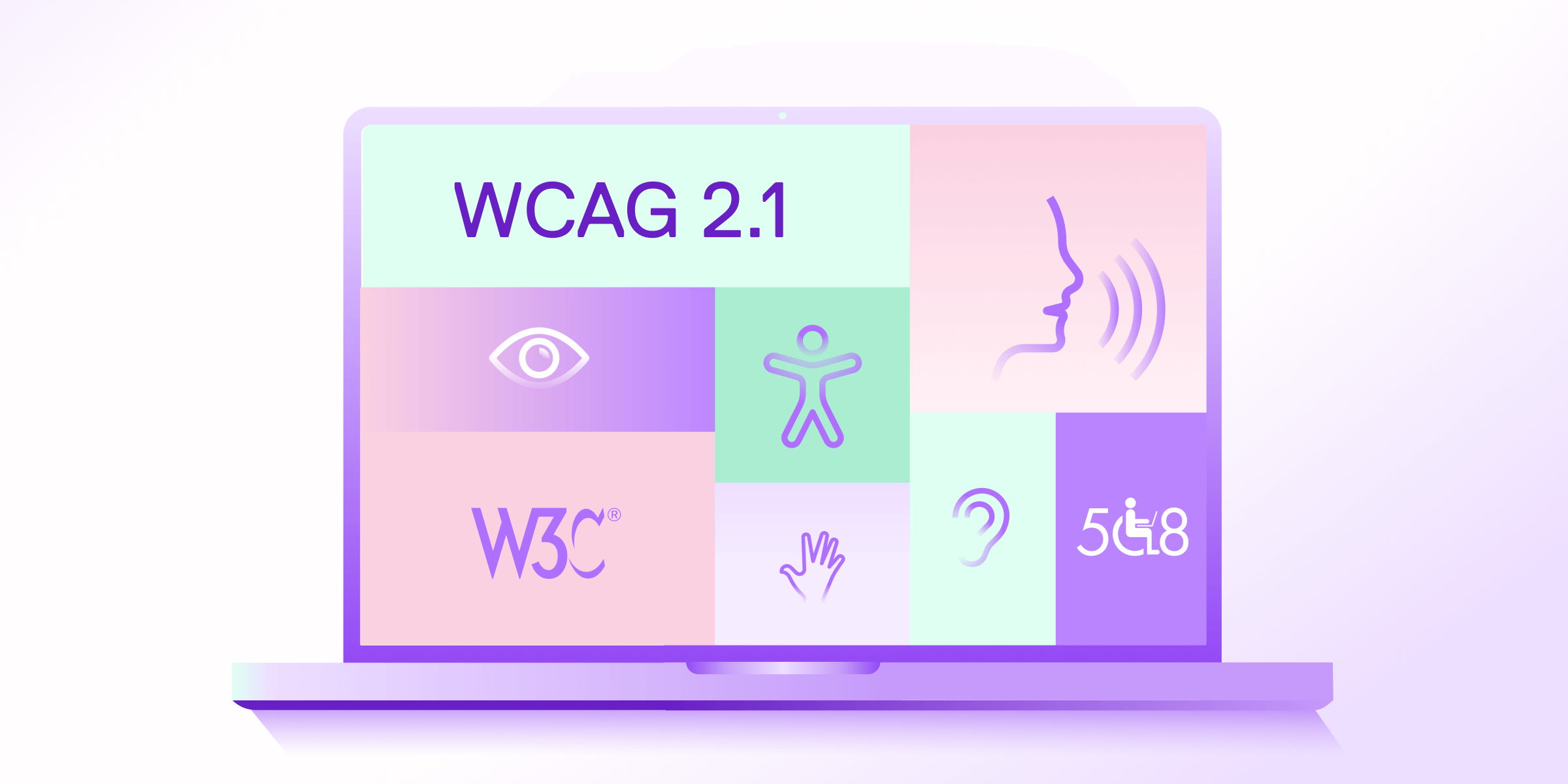
With a DOJ deadline of April 24, 2026 requiring accessible digital tools, Top Hat has published a plain-language accessibility guide for educators. It emphasizes that while accessibility requires effort, the basics are manageable. The guide focuses on WCAG 2.1 Level AA — the dominant US and Canadian standard — and covers both software platforms and course content like slides, documents, and images.