
Filtered by tag: education × Clear
Debaters Tried to Change People's Minds About AI. Here's What Happened.
Matched: Artificial Intelligence
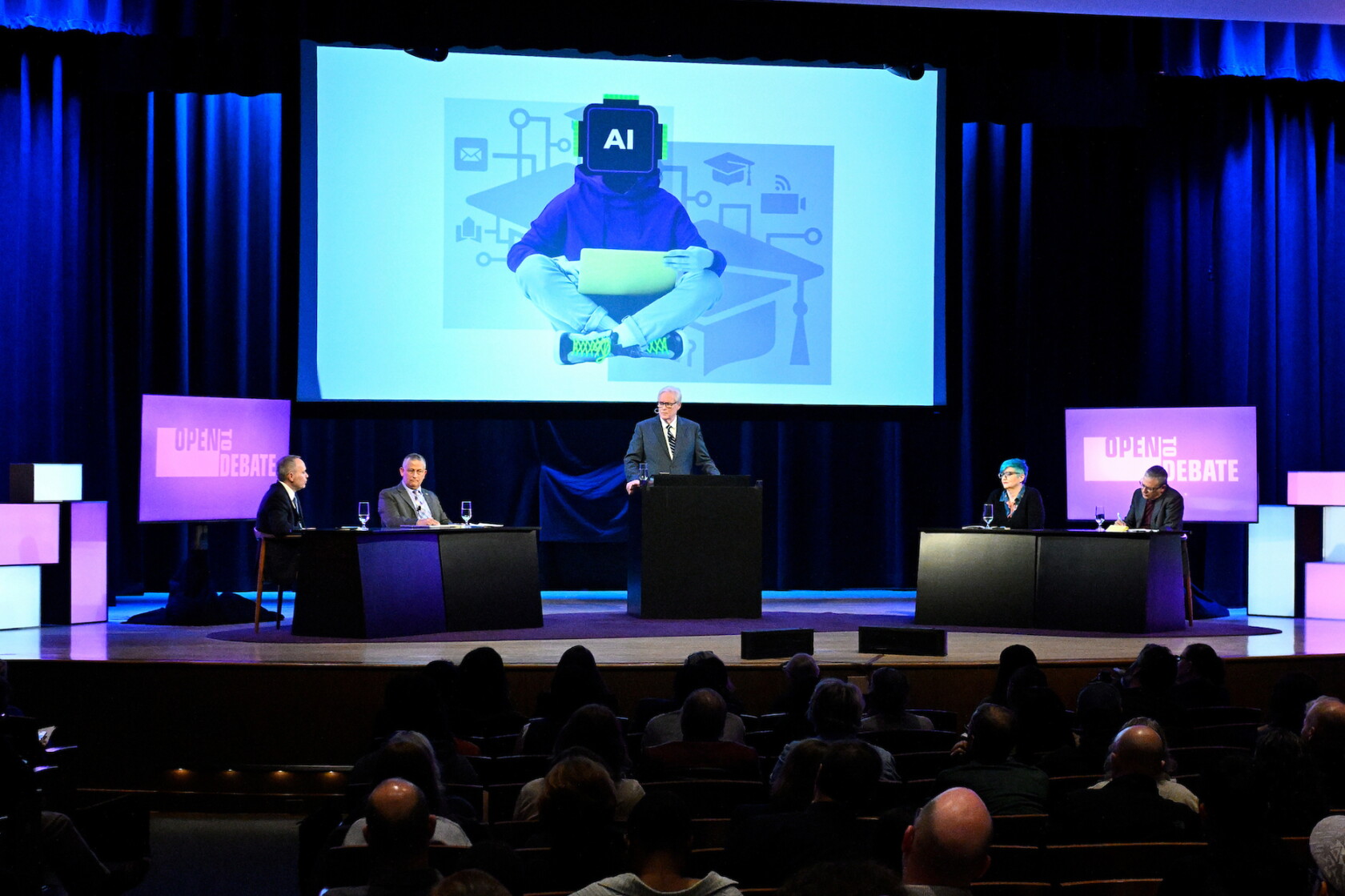
A Tuesday debate on AI's impact on college students drew a notably uncertain audience, with over a third of attendees undecided beforehand. Debaters on both sides attempted to sway opinion on whether generative AI helps or harms students' education. The outcome reflected broader uncertainty around a topic that, despite widespread public discussion, leaves many people genuinely unsure where they stand.

How to Assign Research Papers Again
Matched: AI
Two political science professors argue that research paper assignments remain valuable but require adaptation in the AI era. They suggest three approaches: requiring students to submit drafts and process documentation, conducting brief oral follow-ups where students discuss their written work, and designing more specific, personalized prompts that are harder for AI to address generically. The goal is restoring confidence in authentic student writing.

Silicon Valley AI Academy Seeks ‘Main Character’ Students
Matched: AI
Andreessen Horowitz is launching an unaccredited academy aimed at young people, teaching them to thrive in the AI era at costs comparable to Ivy League tuition. The program emphasizes self-directed, ambitious students. Critics have dismissed it as a vanity project reflecting the firm's broader ideological agenda, while supporters see it as a practical alternative to traditional higher education.

AI Bots Can Seem Sentient. Students Need Guardrails.
Matched: AI
Increasingly lifelike AI chatbots are raising concerns among educators about students forming emotional attachments or mistaking AI responses for genuine understanding. Experts argue schools need clear guidelines on appropriate AI use, teaching students to think critically about how these tools work, recognize their limitations, and avoid over-relying on them for emotional support or intellectual tasks.

Learning with AI falls short compared to old-fashioned web search
Matched: AI
A study of over 10,000 participants found that people who used AI chatbots like ChatGPT to learn about topics developed shallower knowledge than those who used standard Google search. LLM users felt they learned less, expended less effort, and produced shorter, less informative advice. Researchers attribute this to AI eliminating the active "friction" of navigating and synthesizing sources yourself — a process that deepens understanding.

Where does human thinking end and AI begin? An AI authorship protocol aims to show the difference
Matched: AI
A philosophy professor argues that AI threatens the link between student thinking and submitted work, eroding academic integrity and professional accountability. He is piloting an "authorship protocol" at Temple University that uses conversational AI prompts to verify students' reasoning aligns with their writing, without keystroke surveillance. The system issues a secure tag confirming work was produced under specified conditions, aiming to preserve human judgment in education and beyond.

AI-generated lesson plans fall short on inspiring students and promoting critical thinking
Matched: AI, Artificial Intelligence
A study analyzing 311 AI-generated civics lesson plans from ChatGPT, Gemini, and Copilot found they largely promote rote memorization over critical thinking, with 90% of activities targeting only basic cognitive skills. Just 6% included multicultural content. Researchers recommend teachers use AI to supplement rather than replace their planning process, using detailed, framework-informed prompts instead of simple requests.
How does AI affect how we learn? A cognitive psychologist explains why you learn when the work is hard
Matched: AI
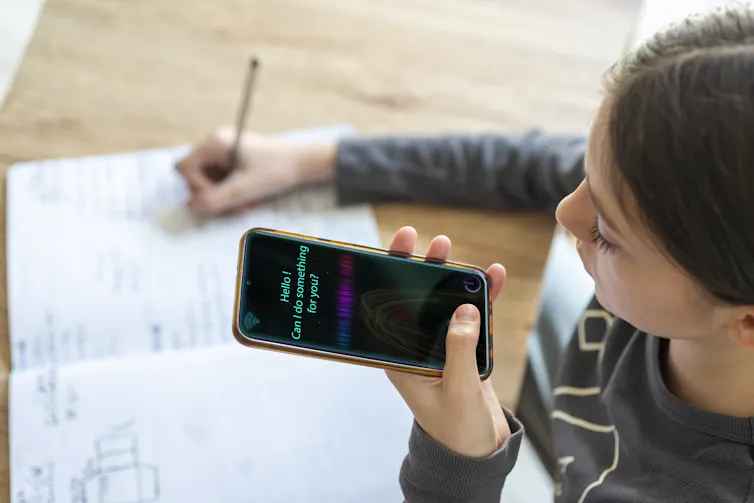
Early research on AI in education shows mixed results, with some benefits but also evidence of impaired critical thinking and over-reliance. Cognitive psychology offers useful context: learning requires effortful "System 2" thinking, and offloading that work to AI can weaken knowledge retention and cause students to overestimate their own understanding. While AI tutors that use Socratic questioning show some promise, they haven't consistently outperformed traditional study methods and introduce their own metacognitive pitfalls.
Teachers are key to students’ AI literacy, and need support
Matched: AI
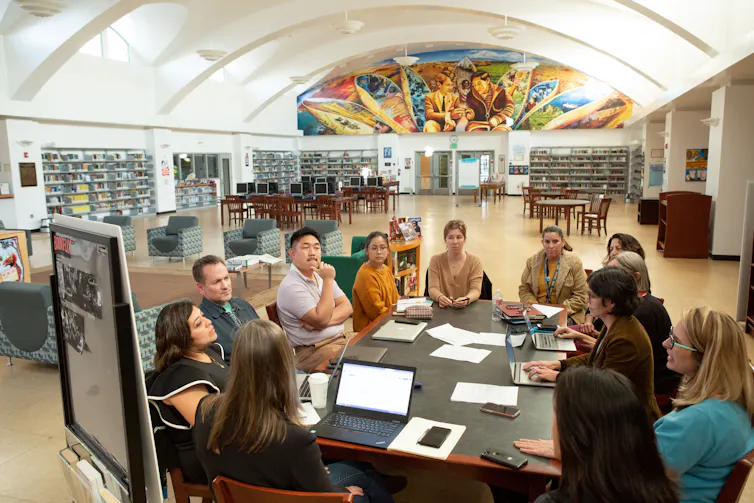
Teachers are struggling to keep pace with rapid AI advancements in classrooms, according to Canadian education researchers. The Canadian Teachers' Federation has urged federal and provincial governments to enact enforceable AI policies protecting student privacy and promoting ethical use. Researchers argue teachers need structured professional development covering AI literacy, ethics, foundational knowledge, and classroom integration strategies. A collaborative effort from policymakers, school boards, and researchers is considered essential.

Kids need soft skills in the age of AI, but what does this mean for schools?
Matched: AI, Artificial Intelligence
As generative AI threatens white-collar jobs, schools are rethinking what skills students need. Unlike prior automation, AI can simulate coding, writing, and data analysis, making soft skills like emotional awareness, problem-solving, and interpersonal ability increasingly valuable. Teachers can build these through reflective exercises and real-world problem-solving. Experts also warn against letting AI shortcut learning, since effort is essential to building skills.