
Filtered by tag: generative ai × Clear

No More 'Grunt Work'?
Matched: generative AI
Staff at higher education institutions are increasingly using generative AI to handle routine tasks like drafting emails, summarizing documents, and writing reports. While many employees welcome the time savings, others are resistant, preferring traditional workflows. Some worry about accuracy, job security, or simply feel the old methods worked fine. Institutions are navigating how to encourage adoption without alienating skeptical staff.

Universities Lean on Existing Investments to Launch AI Tools
Matched: Artificial Intelligence
Several universities are rolling out AI tools by leveraging existing vendor relationships rather than building new infrastructure. Schools like Case Western Reserve are offering students and staff access to tools like Google's Gemini through existing institutional accounts, lowering costs and implementation barriers while expanding access to AI writing, learning, and image-generation capabilities across campuses.
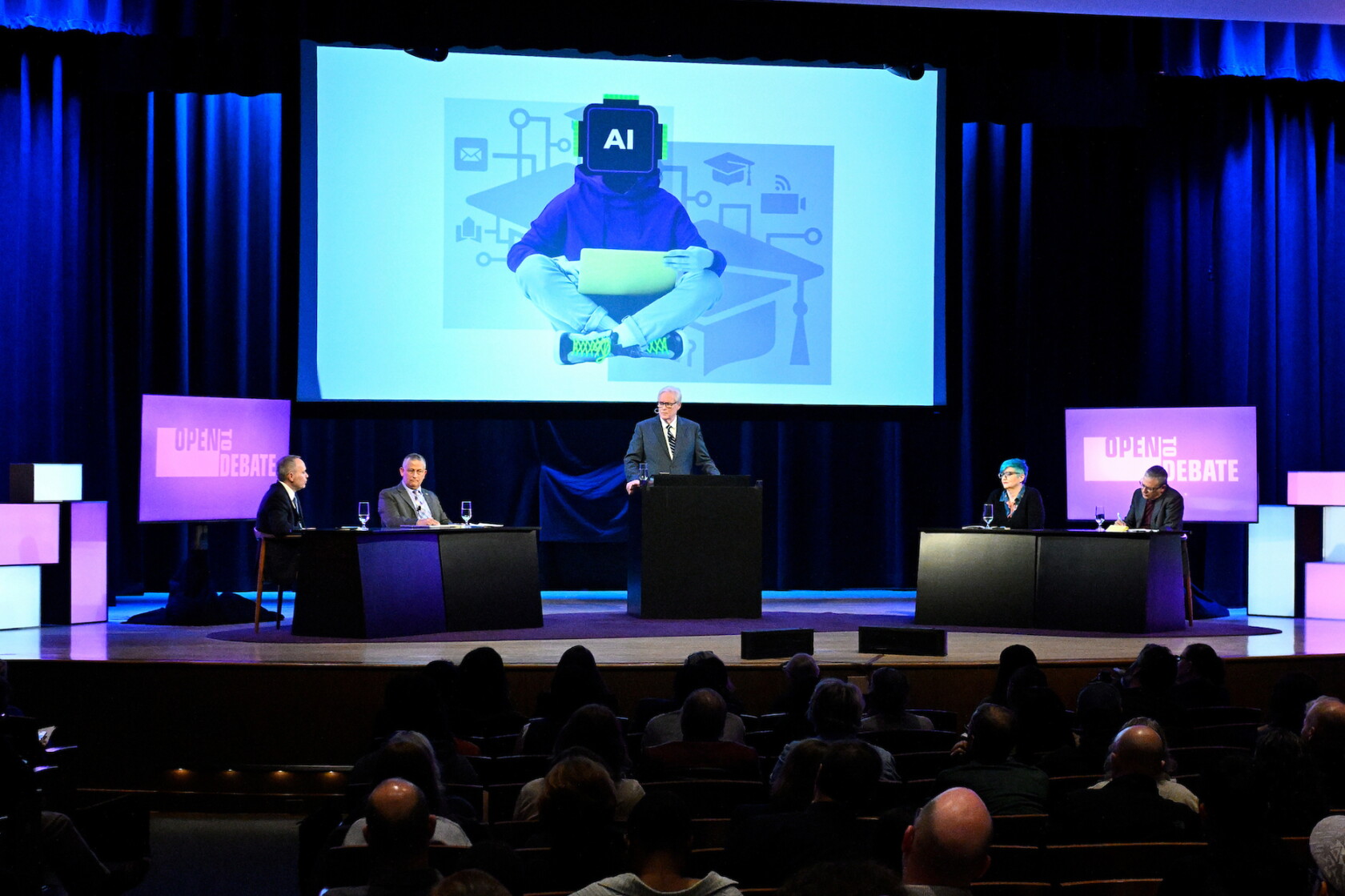
Debaters Tried to Change People's Minds About AI. Here's What Happened.
Matched: Artificial Intelligence
A Tuesday debate on AI's impact on college students drew a notably uncertain audience, with over a third of attendees undecided beforehand. Debaters on both sides attempted to sway opinion on whether generative AI helps or harms students' education. The outcome reflected broader uncertainty around a topic that, despite widespread public discussion, leaves many people genuinely unsure where they stand.

WEEKEND READING: When academic misconduct becomes an identity: what happens after the sanction?
Matched: generative AI
Academic misconduct procedures focus on detection, investigation, and sanction but rarely address what comes next for students. Dr Manesha Peiris argues institutions should consider reintegration — allowing students to demonstrate learning and rebuild trust without past findings permanently shaping how their work is viewed. She also raises equity concerns around GenAI, warning that markers of "suspicious" work may disadvantage some students disproportionately.

As more Australian universities use AI to mark students’ work, is it creating a ‘slop-cycle’?
Matched: AI, Artificial Intelligence
Australian universities are increasingly using AI to help mark student assignments, raising concerns about a damaging feedback loop. Academics warn that if AI grades work, students may use AI to write it, producing low-quality "slop" that AI then evaluates — a cycle that could undermine genuine learning. Critics say the trend poses an existential threat to higher education, though institutions are divided on how to respond.

AI Writing Detection: A Losing Battle Worth Fighting
Matched: AI
Tools designed to detect AI-generated text are proving unreliable, frequently flagging human writing as machine-made and missing actual AI content. Experts disagree on whether the technology can ever be accurate enough to be useful. Despite flaws, many educators and institutions continue using detectors, arguing that imperfect tools still create some deterrent, even as critics warn the false positives cause real harm to students.

How Higher Ed Institutions Can Control AI Spending Without Curbing Innovation
Matched: Agentic, AI, Artificial Intelligence
Universities face budget pressure as AI vendors shift from flat subscription fees to consumption-based pricing. Broad faculty, student, and research use makes costs unpredictable, with inefficient prompting and premium model usage adding up across departments. Institutions are developing spending visibility tools and governance strategies to forecast and manage AI expenses without restricting academic innovation or research flexibility.

College students are writing with AI – but a pilot study finds they’re not simply letting it write for them
Matched: AI, Artificial Intelligence
A pilot study at Kennesaw State University used think-aloud protocols and screen recordings to observe how 20 undergraduates actually used AI while writing, rather than relying on surveys or finished papers. Researchers left the room to reduce self-conscious behavior. Students typically used AI for brainstorming and overcoming writer's block, but frequently edited or rejected its output, maintaining control over argument and voice. The findings suggest AI functions more as a collaborative tool than a ghostwriter, though researchers caution the small sample limits broader conclusions.

Generative AI in business schools: friend or foe?
Matched: AI, Artificial Intelligence
A UK study of 15 business graduates found students use ChatGPT routinely for drafting, summarising, and overcoming writer's block, but harbour nuanced concerns. Key tensions include unequal access to premium AI tools versus AI's potential to support students with disabilities or language barriers, and inconsistent institutional rules creating anxiety around academic integrity. Students also fear employers may undervalue their degrees as "AI-generated." Researchers recommend clearer guidelines, process-focused assessments, and equitable access to AI tools.

A writing professor’s new task in the age of AI: Teaching students when to struggle
Matched: AI
A writing professor describes navigating AI in higher education, neither banning it nor embracing it uncritically. Early classroom experiments revealed AI's errors and biases. Over time, she shifted from neutral observer to guide, asking students to write without AI so they can understand their own thinking first. Research shows AI use can improve short-term scores while hindering deeper learning. Her approach focuses on building student judgment about when AI helps versus when it undermines genuine intellectual development.

Colleges face a choice: Try to shape AI’s impact on learning, or be redefined by it
Matched: AI, Artificial Intelligence
Colleges are grappling with how AI reshapes education beyond just plagiarism concerns. Most institutions leave AI policy to individual professors rather than adopting campus-wide rules. Faculty have shifted from banning AI to guiding its use, with some redesigning assessments to include oral exams and live debates. Without coordinated institutional strategies, educators warn AI may quietly redefine what counts as learning.

Student cheating dominates talk of generative AI in higher ed, but universities and tech companies face ethical issues too
Matched: AI, Artificial Intelligence
Debates about AI in higher education focus mainly on student cheating, but broader ethical issues deserve attention. These include tech companies training AI models on copyrighted material, student data privacy under vendor agreements, and unequal access to AI tools. Experts argue responsibility shouldn't fall solely on students — universities should vet AI tools, disclose vendor terms transparently, and update academic integrity policies, while tech companies must address their own ethical violations.

Teachers are key to students’ AI literacy, and need support
Matched: AI, Artificial Intelligence
Teachers are underprepared for AI's rapid integration into classrooms, say Canadian researchers. The Canadian Teachers' Federation is urging federal and provincial governments to enact enforceable policies protecting student privacy and promoting ethical AI use. Experts argue teachers need tailored professional development covering AI literacy, societal impacts, and classroom integration strategies. A collaborative effort from policymakers, school boards, and researchers is essential to ensure AI adoption is strategic, equitable, and sustainable.

Generative AI is coming to the workplace, so I designed a business technology class with AI baked in
Matched: AI, Artificial Intelligence
A University of Wisconsin-Stout professor integrated Microsoft 365 Copilot into a senior business technology capstone course, having students explore the tool freely and journal their experiences. Students quickly grew comfortable using AI to summarize meetings, draft slides, and review assignments, but struggled initially with writing effective prompts and encountered AI hallucinations, reinforcing the need for fact-checking. The instructor noted AI requires more critical reflection than standard software and plans to embed generative AI across more courses, emphasizing literacy over reliance.