
Filtered by tag: higher education × Clear

Finding the Right Disaster Recovery Strategy for Higher Ed
Matched: AI
Higher education institutions are prioritizing disaster recovery as cyberattacks and unplanned downtime threaten operations. Immutable backups are now considered essential, not optional. However, cost concerns and limited IT staff capacity remain barriers. A Veeam survey found 92% of IT professionals want backup solutions better tailored to their needs, highlighting a gap between the importance institutions place on disaster recovery and their ability to implement effective strategies.

‘Who’s looking after the researchers?’ The missing conversation in research culture
Matched: AI
Researchers studying difficult topics like domestic abuse, poverty, and trauma face significant emotional burdens that universities rarely address. A Warwick project found many researchers carry distressing experiences beyond working hours, yet receive little preparation for this. Early career researchers often fear admitting struggles. The authors argue researcher wellbeing should be embedded in ethics processes, training, and institutional strategy — not treated as optional.

How Colleges Are Using Technology To Attract Students on Campus Visits
Matched: AI
Colleges are increasingly using technology to impress prospective students during campus visits, which 86% of enrollment leaders say are the defining factor in securing enrollment. When IT and admissions teams collaborate, institutions can showcase their technical capabilities as a recruitment tool. Smaller schools rely on campus visits most heavily, making these first impressions especially critical to their enrollment strategies.

How to Assign Research Papers Again
Matched: AI
Two political science professors argue that research paper assignments remain valuable but require adaptation in the AI era. They suggest three approaches: requiring students to submit drafts and process documentation, conducting brief oral follow-ups where students discuss their written work, and designing more specific, personalized prompts that are harder for AI to address generically. The goal is restoring confidence in authentic student writing.

Leading through disruption
Matched: AI
Higher education leaders face compounding pressures including financial restructuring, course closures, AI integration, and employer scrutiny. Research shows redundancies damage morale while leadership turnover accelerates. Drawing on Heifetz and Linsky's adaptive leadership framework, the article argues institutions focus too heavily on technical fixes while neglecting adaptive challenges — the human, cultural, and behavioural change required. Leaders are urged to name adaptive work explicitly in change plans and build sustainable support structures alongside operational ones.

Review of William Whyte: The University: A History in Stone, Silk and Blood
Matched: AI
William Whyte's book traces university history through its physical and material dimensions, exploring how institutions evolved from mobile medieval gatherings to established bureaucracies. Themes include recurring critiques of universities across centuries, the impact of new technologies, expansion pressures, and persistent forecasts of their demise — from the printing press to MOOCs — while universities continue to endure and adapt.

Is it time to ditch AI detection tools?
Matched: AI, Artificial Intelligence
AI detection tools used in education are unreliable and should be abandoned, argues a Charles Sturt University researcher. Even low false-positive rates can wrongly flag thousands of students for misconduct, causing significant stress. Tools also struggle with real-world contexts where AI assistance blurs into human writing. Instead, educators should redesign assessments to include supervised tasks that genuinely measure student learning outcomes.
New HEPI and CUP&A Report: ‘Soft Power Index 2026’
Matched: AI
The 2026 HEPI/Cambridge University Press & Assessment Soft Power Index finds the US and UK together educated 126 current world leaders, with the US leading at 66 and the UK at 60. France ranks third with 29. Harvard, Oxford and Sandhurst top the institutional rankings. The 10th anniversary edition also examines how recent UK policy changes on international students could affect the country's long-term global influence.

WEEKEND READING: When prestige trumps skills: rethinking excellence in higher education
Matched: AI
Professor David Mba argues that England's skills system overvalues research-intensive universities as the benchmark for excellence, while undervaluing teaching-focused institutions that train nurses, teachers and other professionals. Using the NHS Graduate Guarantee as a starting point, he contends that producing qualified graduates is only part of workforce development — employment, deployment and retention matter equally. He calls for a broader definition of higher education excellence that recognises regional workforce contribution alongside research output.

WEEKEND READING: Points of convergence: the evolution of the UK Quality Code
Matched: AI
QAA's Dr Andy Smith traces the evolution of the UK Quality Code from the 1997 Dearing Report through successive iterations. Beginning as a 258-page, 175-precept Code of Practice, it was streamlined to a single A4 page in 2018 before expanding to an 18-page, 12-principle framework in 2024. The latest edition is now fully supported by nine newly published Advice & Guidance collections, completing a sector-owned resource co-created with colleagues across all four UK nations.

AI-Edited Stanford Ad Violated University Policy, Official Says
Matched: AI
Stanford University has determined that an AI-edited advertisement violated university policy, according to an official. The ad was modified using artificial intelligence tools without proper authorization or oversight, breaching internal guidelines governing the use of such technology. The incident has prompted the university to review its policies around AI use in official communications and promotional materials.

Why Does an AI Faculty Shortage Exist? It’s Complicated.
Matched: AI
Universities are struggling to hire AI faculty because they can't compete with tech industry salaries, which can reach several times what academia offers. Demand for AI expertise has surged while the pipeline of qualified PhD graduates remains limited. Many researchers also prefer industry labs for resources and fewer administrative burdens. Some schools are experimenting with joint appointments and adjunct roles to fill gaps.
Dartmouth’s Provost Quietly Used AI in His Published Work. It’s Touched Off a Campus Firestorm.
Matched: AI
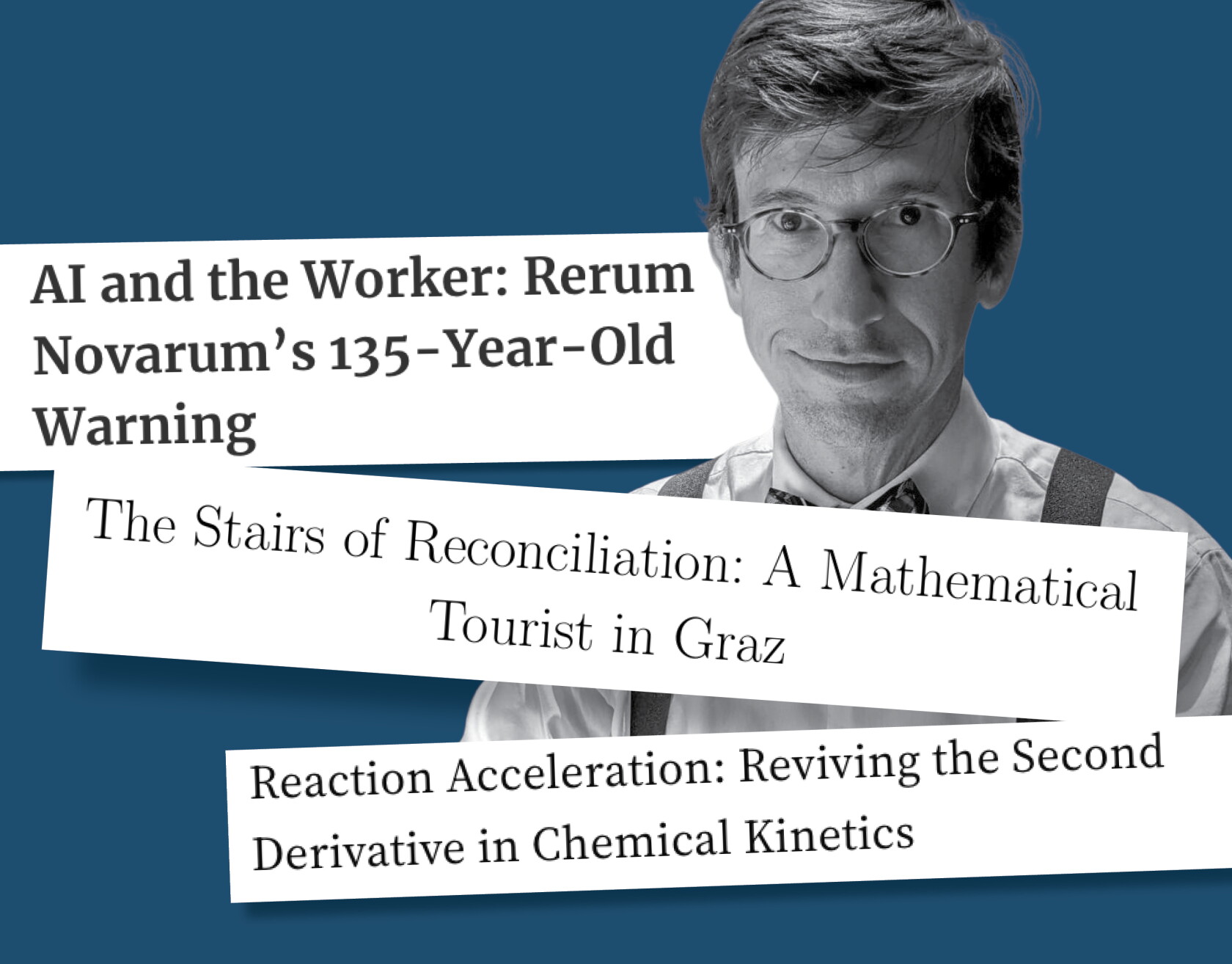
Dartmouth's provost acknowledged using AI-generated text in a published academic article without disclosure, sparking controversy on campus. Critics argue the incident undermines academic integrity standards students are held to. The situation has intensified broader debates at Dartmouth over the college's generally permissive stance toward AI use, with faculty and students questioning whether leadership is modeling appropriate behavior.

The Most AI-Exposed College Graduates Are Entering Another Great Recession
Matched: AI
Recent Census Bureau data shows college graduates in AI-exposed fields are entering a difficult job market, potentially rivaling past recessions. The findings may influence students' major choices as those in certain fields face greater economic vulnerability. The report provides concrete evidence of how specific majors are performing, linking AI's growing role in the economy to shifting employment outcomes for new graduates.

Why the Right Infrastructure for Higher Ed AI Workloads Might Be Hybrid
Matched: AI, Artificial Intelligence
Higher education institutions are increasingly adopting hybrid infrastructure to run AI workloads, balancing on-premises and cloud environments. IDC predicts 75% of enterprise AI workloads will run on hybrid infrastructure by 2028. Colleges are drawn to hybrid setups for flexibility, cost control, and data sovereignty, allowing them to optimize performance while meeting security and compliance requirements specific to academic environments.

How Higher Ed Institutions Can Control AI Spending Without Curbing Innovation
Matched: Agentic, AI, Artificial Intelligence
Universities face budget pressure as AI vendors shift from flat subscription fees to consumption-based pricing. Broad faculty, student, and research use makes costs unpredictable, with inefficient prompting and premium model usage adding up across departments. Institutions are developing spending visibility tools and governance strategies to forecast and manage AI expenses without restricting academic innovation or research flexibility.

From Human Speed to Machine Speed: How Higher Ed Security Is Using AI to Fight Agentic Attacks
Matched: Agentic, AI, Artificial Intelligence
Small university security teams are being outpaced by AI-driven "agentic" attacks that operate far faster than humans can respond. Teams of two to five staff at regional institutions are overwhelmed triaging alerts manually, forcing them to prioritize and potentially miss threats. Higher ed institutions are increasingly turning to AI-powered security tools to close this gap and match the automated speed of modern cyberattacks.

How University IT Leaders Can Budget for Volatile AI Pricing Models
Matched: AI, Artificial Intelligence
University IT leaders face mounting challenges budgeting for AI due to unpredictable consumption-based pricing models. Many institutions adopt AI tools without fully understanding cost structures, while simultaneously facing budget cuts. CIOs report difficulty balancing pressure to lead AI adoption against shrinking resources, and struggle to communicate this tension to administrators.

‘It sits at the meeting point of science and the humanities’: should you study psychology?
Matched: AI
Psychology is among the most popular university degrees, valued for bridging science and humanities. Graduates gain transferable skills including data analysis, making them competitive across diverse careers beyond clinical roles. The field covers areas from neuroscience to forensic psychology, and its insights into human behaviour appeal to employers in business, sales, and beyond.

The value of true differentiation
Matched: AI, Artificial Intelligence
Higher education providers risk turning genuine differentiation into sector-wide conformity by copying competitors' investments, from campus amenities to support services. Australian independent providers show strong student satisfaction results but must convert that into distinctive positioning. Durable advantages — alumni networks, institutional culture, employer relationships — take years to build and are hard to replicate, unlike facilities or technology. Providers should focus on long-term identity rather than feature competition.

Building shared resilience in higher ed
Matched: AI
Higher education campuses face significant cybersecurity risks due to large, constantly changing user populations, sensitive research data, and complex vendor ecosystems. With education ranking fifth for notifiable breaches in Australia in 2025, TechnologyOne's security head argues institutions must move beyond individual security postures toward collective resilience — sharing testing programs, scrutinising third-party vendors more deeply than standard questionnaires allow, and collaborating directly with software providers to improve security outcomes sector-wide.

Top Hat and the First Nations Child and Family Caring Society Announce 2026 Shannen’s Dream Scholarship Recipients
Matched: AI
Three First Nations students have been named 2026 Shannen's Dream Scholarship recipients, receiving $20,000 in total support from the First Nations Child & Family Caring Society and lead sponsor Top Hat. Recipients Natasha Big Smoke Woitte (pharmacy, UBC), April Quill (statistics, University of Manitoba), and Drea Sinclair (social work, Lakehead University) were recognized for academic achievement and community leadership. The scholarship honors activist Shannen Koostachin's legacy of advocating for equitable First Nations education.

25 Effective Instructional Strategies For Educators
Matched: AI
Instructional strategies are techniques teachers use to engage students and support learning goals. Categories include active learning methods like flipped classrooms, think-pair-share, exit tickets, and reflective journals; assessment tools like quizzes, cubing, and homework; group approaches like debates and case studies; advanced strategies like independent projects; organizational tools like agendas and portfolios; and tiered activities tailored to varying student readiness levels.
Top Hat Earns Spot on TIME’s World’s Top EdTech Companies 2026 List
Matched: AI
Top Hat has been named to TIME Magazine's World's Top EdTech Companies 2026 list, marking the second consecutive recognition for the Toronto-based higher education platform. Selected from roughly 6,500 companies worldwide, Top Hat was recognized for its student engagement tools and AI-powered product Top Hat Ace, which converts course materials into interactive content and provides students with personalized, course-specific study support.
Today’s AI is Economically Unsustainable for Education
Matched: Agentic
Current AI economics are unsustainable for education. AI companies aren't yet profitable, and usage-based API costs are wildly variable — some firms have accidentally spent hundreds of millions in a month. EdTech SaaS depends on fixed costs to fit institutional budgets; variable AI token pricing breaks that model entirely. Expect constrained AI features in platforms rather than open-ended tools, with true broad adoption likely still years away.