
Filtered by tag: artificial intelligence × Clear

Why the Right Infrastructure for Higher Ed AI Workloads Might Be Hybrid
Matched: AI, Artificial Intelligence
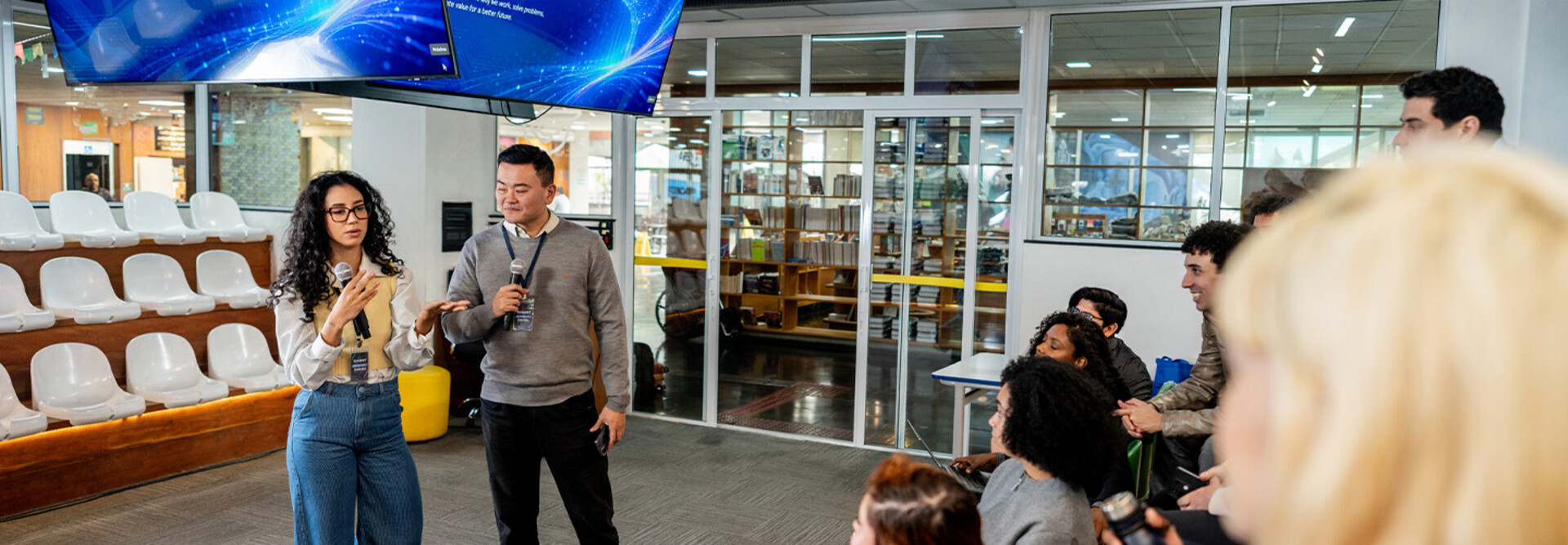
Higher education institutions are increasingly adopting hybrid infrastructure to run AI workloads, balancing on-premises and cloud environments. IDC predicts 75% of enterprise AI workloads will run on hybrid infrastructure by 2028. Colleges are drawn to hybrid setups for flexibility, cost control, and data sovereignty, allowing them to optimize performance while meeting security and compliance requirements specific to academic environments.
How Higher Ed Institutions Can Control AI Spending Without Curbing Innovation
Matched: Agentic, AI, Artificial Intelligence
Universities face budget pressure as AI vendors shift from flat subscription fees to consumption-based pricing. Broad faculty, student, and research use makes costs unpredictable, with inefficient prompting and premium model usage adding up across departments. Institutions are developing spending visibility tools and governance strategies to forecast and manage AI expenses without restricting academic innovation or research flexibility.

From Human Speed to Machine Speed: How Higher Ed Security Is Using AI to Fight Agentic Attacks
Matched: Agentic, AI, Artificial Intelligence
Small university security teams are being outpaced by AI-driven "agentic" attacks that operate far faster than humans can respond. Teams of two to five staff at regional institutions are overwhelmed triaging alerts manually, forcing them to prioritize and potentially miss threats. Higher ed institutions are increasingly turning to AI-powered security tools to close this gap and match the automated speed of modern cyberattacks.

How University IT Leaders Can Budget for Volatile AI Pricing Models
Matched: AI, Artificial Intelligence
University IT leaders face mounting challenges budgeting for AI due to unpredictable consumption-based pricing models. Many institutions adopt AI tools without fully understanding cost structures, while simultaneously facing budget cuts. CIOs report difficulty balancing pressure to lead AI adoption against shrinking resources, and struggle to communicate this tension to administrators.
Top Hat Earns Spot on TIME’s World’s Top EdTech Companies 2026 List
Matched: AI
Top Hat has been named to TIME Magazine's World's Top EdTech Companies 2026 list, marking the second consecutive recognition for the Toronto-based higher education platform. Selected from roughly 6,500 companies worldwide, Top Hat was recognized for its student engagement tools and AI-powered product Top Hat Ace, which converts course materials into interactive content and provides students with personalized, course-specific study support.
Active Learning Meets AI: What 9,172 Students Told Us About Success in 2026
Matched: AI
A Top Hat survey of 9,172 students across 550+ institutions found that active learning and AI tools boost academic outcomes. Students using live in-class features reported higher engagement and confidence than average. Those engaging with content outside class showed stronger success rates. Users of Top Hat's AI assistant Ace reported notably higher understanding, engagement, and perceived course success compared to the overall student population.
Satya Nadella’s Insights on the Future of Organic Intelligence (OI)
Matched: AI
Satya Nadella argues AI will transform firms by creating a "cognitive loop" where human insight is captured and compounded into company-owned AI models. Drawing on economic theory about coordination costs, he frames this as mutually beneficial for workers and firms. However, the author notes Nadella's model risks being extractive rather than truly compounding for workers, unless systems are built to recognize individual contributions, preserve portable skills records, and invest in human development alongside AI capability.
Today’s AI is Economically Unsustainable for Education
Matched: Agentic, AI
Current AI economics are unsustainable for education. AI companies aren't yet profitable, and usage-based API costs are wildly variable — some firms have accidentally spent hundreds of millions in a month. EdTech SaaS depends on fixed costs to fit institutional budgets; variable AI token pricing breaks that model entirely. Expect constrained AI features in platforms rather than open-ended tools, with true broad adoption likely still years away.

e-Literacy and Changing Times: Emerging Themes for Learning Impact
Matched: AI
1EdTech CSO Michael Feldstein and Claude Opus discuss why standards bodies matter beyond technical specs. Using Conway's Law—that software reflects the communication structures that produced it—they argue EdTech's failures stem from broken collaboration, not bad intentions. They explore how 1EdTech is shifting toward convening broader conversations around AI, competency standards, learner records, and global interoperability, treating community dialogue as upstream of any specification.

An Explanation of AI that Could Be Wrong (Which is Good)
Matched: AI, Artificial Intelligence
A former strategy executive and lifelong cognitive science enthusiast has published a scholarly paper arguing for a falsifiable theory of what AI actually learns during training. The paper, "Distinctions Worth Preserving," draws on decades of cross-disciplinary reading spanning philosophy, linguistics, learning science, and AI research. The author frames the work as a field-positioning argument and provides a falsification experiment. The post also offers prompting guides for using AI tools to engage with the paper.

7 Practical Ways to Use AI as a Thinking Partner in Your Classroom
Matched: AI, Artificial Intelligence
Educators are encouraged to treat AI as a "thinking partner" rather than banning it or allowing uncritical use. Strategies include making the assignment's intellectual purpose explicit, having students critique AI-generated responses, using AI to test arguments and identify weaknesses, building in reflective prompts, and anchoring AI tools to course materials. The goal is deeper cognitive engagement, not just task completion.

Literally Nobody Understands AI. That’s bad.
Matched: AI, Artificial Intelligence
AI remains poorly understood even by experts — no widely accepted theory explains how it works. Models trained only on positive examples somehow learn language despite proofs suggesting that's impossible. They excel at complex tasks yet fail simple ones, like tracking who said what in a conversation. Without scientific understanding, fixes remain makeshift hacks. Economic pressure to build smaller, efficient models is now pushing researchers toward deeper explanations.

A writing professor’s new task in the age of AI: Teaching students when to struggle
Matched: AI
A writing professor describes navigating AI in higher education, neither banning it nor embracing it uncritically. Early classroom experiments revealed AI's errors and biases. Over time, she shifted from neutral observer to guide, asking students to write without AI so they can understand their own thinking first. Research shows AI use can improve short-term scores while hindering deeper learning. Her approach focuses on building student judgment about when AI helps versus when it undermines genuine intellectual development.

Colleges face a choice: Try to shape AI’s impact on learning, or be redefined by it
Matched: AI, Artificial Intelligence
Colleges are grappling with how AI reshapes education beyond just plagiarism concerns. Most institutions leave AI policy to individual professors rather than adopting campus-wide rules. Faculty have shifted from banning AI to guiding its use, with some redesigning assessments to include oral exams and live debates. Without coordinated institutional strategies, educators warn AI may quietly redefine what counts as learning.

The greatest risk of AI in higher education isn’t cheating – it’s the erosion of learning itself
Matched: AI, Artificial Intelligence
The real danger of AI in higher education isn't cheating but the erosion of learning itself, argue researchers from UMass Boston. As AI handles more teaching, research, and administrative tasks, universities risk hollowing out the mentorship pipelines and productive struggles that build genuine expertise. From automated advising to agentic research tools, the shift raises questions about transparency, accountability, and whether universities remain ecosystems that form human judgment or merely credential factories.

Short on resources, special educators are using AI – with little knowledge of the effects
Matched: AI, Artificial Intelligence
U.S. special education faces chronic underfunding and staffing shortages, pushing some educators toward AI tools to manage caseloads, draft individualized education plans, assist with assessments, and support professional training. While AI shows promise in reducing administrative burdens, serious concerns remain around student data privacy, algorithmic bias, legal compliance, and whether AI-generated plans truly serve individual children's needs. Empirical evidence that AI meets required standards of care is lacking.

Top Hat Graded 2025: Empowering Teaching, Inspiring Learning
Matched: AI
Top Hat's 2025 annual report highlights growth in AI-assisted teaching through its Ace tool. Over 107,000 students used Ace—a 114% increase year-over-year—primarily for on-demand practice quizzes. Instructors used it to generate assessments and activities while retaining editorial control. Across the platform, 14.3 million questions were created, led by 9 million multiple-choice questions, with long-answer prompts also growing significantly.

Learning with AI falls short compared to old-fashioned web search
Matched: AI
A study of over 10,000 participants found that people who used AI chatbots like ChatGPT to learn about topics developed shallower knowledge than those who used standard Google search. LLM users felt they learned less, expended less effort, and produced shorter, less informative advice. Researchers attribute this to AI eliminating the active "friction" of navigating and synthesizing sources yourself — a process that deepens understanding.

AI in the courtroom: the dangers of using ChatGTP in legal practice in South Africa
Matched: AI, Artificial Intelligence
A South African court case in January 2025 highlighted dangers of AI in legal practice after a legal team submitted mostly fabricated case law generated by ChatGPT. Only two of nine cited authorities were real. The court deemed the conduct irresponsible and referred the matter to the Legal Practice Council. Legal academics argue law schools must urgently teach AI literacy, emphasising verification, critical thinking, and professional ethics alongside AI tool use.

Where does human thinking end and AI begin? An AI authorship protocol aims to show the difference
Matched: AI, Artificial Intelligence
A philosophy professor argues that AI threatens accountability in education and professions by obscuring whether humans actually did the thinking behind submitted work. He is piloting an "authorship protocol" at Temple University that uses conversational AI prompts to verify student reasoning aligns with their writing, without keystroke surveillance. The system issues secure tags certifying work met specified conditions, aiming to preserve human judgment rather than detect AI use.
Top Hat Unveils AI-Powered Content Enhancer to Accelerate Title II Accessibility Compliance in Higher Ed
Matched: AI
Top Hat launched Ace Content Enhancer, an AI tool helping college educators meet WCAG 2.1 AA accessibility standards required under the DOJ's 2024 Title II ruling, with compliance deadlines starting April 2026. The tool scans course materials, flags issues, generates alt-text, and suggests improvements. Top Hat says thousands of faculty at over 1,500 North American institutions use its platform.

Can AI keep students motivated, or does it do the opposite?
Matched: AI
AI tools can boost student motivation under the right conditions, but effects vary. Studies show benefits when tools are used consistently, teachers provide guidance, and students maintain agency. Purpose-built platforms like Khanmigo and ALEKS outperform general chatbots for sustained engagement. However, overreliance can erode confidence once AI is removed. Cost barriers also raise equity concerns, as specialized tools remain inaccessible to many students who could benefit most.

AI in Standards: A Conversation with Google and Microsoft
Matched: AI
Google and Microsoft representatives will join a 1EdTech Labs webinar to discuss AI, edtech interoperability standards, and Model Context Protocol (MCP), a standard for providing AI models with educational context. The session aims to generate collaborative experiments rather than open-ended debate, with attendees invited to share ideas and expertise. Registration is open.

AI-generated lesson plans fall short on inspiring students and promoting critical thinking
Matched: AI, Artificial Intelligence
A study analyzing 311 AI-generated civics lesson plans from ChatGPT, Gemini, and Copilot found they largely promote rote memorization over critical thinking, with 90% of activities targeting only basic cognitive skills. Just 6% included multicultural content. Researchers recommend teachers use AI to supplement rather than replace their planning process, using detailed, framework-informed prompts instead of simple requests.

Why higher ed’s AI rush could put corporate interests over public service and independence
Matched: AI, Artificial Intelligence
Universities are rapidly forming corporate AI partnerships — with Nvidia, Microsoft, OpenAI and others — raising concerns about higher education's independence and public mission. Decades of corporatization have already shifted universities toward market-driven priorities, and AI is accelerating this trend. Financial pressures, enrollment declines, and competition for prestige may push institutions to prioritize commercial interests over academic freedom, public-good research, and democratic faculty governance.