
Filtered by tag: higher education × Clear

5 Lessons for Building Institutional AI Capacity in Resource Constrained Settings
Matched: Artificial Intelligence
Cochise College in rural Arizona is using a $1.87 million federal grant called AI-Powered Success to build AI literacy across its institution and surrounding region. The four-year initiative supports faculty professional development, staff capacity-building, K–12 and industry partnerships, and workforce microcredentials with stackable badges linked to college credit, offering lessons for resource-constrained institutions navigating generative AI pressures.

AI Task Forces Drive Policy, Adoption and Innovation in Higher Ed
Matched: Artificial Intelligence
Colleges are forming cross-functional AI task forces to address challenges outpacing governance, including shadow AI use by departments operating outside IT oversight, equity gaps between students with access to premium versus free AI tools, and faculty struggles to uphold academic integrity without becoming full-time AI-detection enforcers.

When Student Laptops Fall Behind, Campus IT Can Close the Gap
Matched: Artificial Intelligence
Many college students struggle with laptops that can't meet growing academic demands. An NVIDIA survey of 1,000 U.S. undergraduates found 61% report more demanding coursework, 64% run multiple demanding applications daily, and 77% say their major influences their laptop choice. As AI-assisted work becomes standard, campus IT departments face pressure to help bridge the gap when personal devices fall short.

Are technicians a hidden indicator of teaching excellence?
Analysis of TEF 2023 submissions found universities referencing technicians in teaching excellence claims were twice as likely to achieve Gold ratings and three times less likely to receive Bronze. A third of providers mentioned technicians in 2023, up from a fifth in 2017. Researchers suggest technician visibility may indicate broader institutional cultures where teaching quality is shared across academic and professional staff rather than siloed within academic roles alone.

No More 'Grunt Work'?
Matched: generative AI
Staff at higher education institutions are increasingly using generative AI to handle routine tasks like drafting emails, summarizing documents, and writing reports. While many employees welcome the time savings, others are resistant, preferring traditional workflows. Some worry about accuracy, job security, or simply feel the old methods worked fine. Institutions are navigating how to encourage adoption without alienating skeptical staff.

Universities Lean on Existing Investments to Launch AI Tools
Matched: Artificial Intelligence
Several universities are rolling out AI tools by leveraging existing vendor relationships rather than building new infrastructure. Schools like Case Western Reserve are offering students and staff access to tools like Google's Gemini through existing institutional accounts, lowering costs and implementation barriers while expanding access to AI writing, learning, and image-generation capabilities across campuses.

Higher Ed Cybersecurity Adapts to Growing AI Threats
Matched: Artificial Intelligence
Higher education institutions face growing cybersecurity threats as AI enables more sophisticated attacks with less effort. Universities are particularly vulnerable due to decentralized IT structures, sprawling networks, and sensitive student and research data. While bad actors exploit AI to scale attacks, IT teams are also adopting AI-powered tools to defend against them, forcing campuses to rethink traditional security models.

The ‘innovation nation’ needs its creative industries
UK creative industries contribute £145bn annually and grow at four times the national rate, yet remain largely excluded from innovation policy. Creative micro-firms lead on R&D activity but are locked out of HMRC tax relief, which requires science or technology advances. The article calls on the Budget to expand R&D definitions to include arts and humanities, simplify support for small creative businesses, and improve government collaboration with universities on creative start-ups.

AI is raising the first rung: Who will turn graduates into professionals?
Matched: Artificial Intelligence
AI is absorbing routine entry-level work that traditionally helped graduates develop professional judgement, disrupting the longstanding arrangement between universities, employers and professional bodies. Entry-level roles are becoming "seniorised," demanding leadership and adaptability earlier. The author argues universities must embed judgement-building across curricula, employers must replace the developmental value of routine work deliberately, and government should establish a formal graduate formation model clarifying responsibilities and funding — with equity in access a central concern.

Can AI make unis more human?
Matched: Agentic, Artificial Intelligence
Agentic AI could make universities more human by handling routine administrative tasks, freeing staff and students for meaningful interactions. Forrester research found 86% of education leaders prioritise student experience, yet only 21% believe their systems support AI capabilities, with 58% citing fragmented systems as a burden. Purpose-built AI tools can simplify enrolment, timetables and finance queries, but require accurate information, clear human handoffs, privacy safeguards, and outcome-focused measurement.

AI and the humanities: crisis or opportunity?
Matched: Artificial Intelligence, generative AI
AI poses both a threat and opportunity to humanities education. LLMs risk devaluing degrees if students submit AI-generated work — professors identified it correctly only 53% of the time in one study. Yet graduates who develop genuinely human skills like critical thinking, ethical reasoning, and cultural understanding may become more valuable to employers precisely because AI cannot replicate these abilities. Universities should adopt assessments, such as oral exams, that cannot be AI-generated.

Are universities ready for agentic AI?
Matched: Agentic
Australian and New Zealand universities are deploying AI faster than their systems can support it, with only 21% of education leaders confident in their infrastructure. The bigger risk lies in agentic AI — systems that act across platforms rather than just advising. A Hugging Face incident involving 1,200 rogue OpenAI agents illustrates the danger. Universities should assign each agent an explicit authority budget covering data access, permitted actions, and human oversight thresholds before scaling deployment.

The next university crisis will not be about students using AI
Matched: Artificial Intelligence, generative AI
Universities have focused AI debate on student use, but the bigger risk is how AI is embedded in institutional operations — recruitment, administration, data, and decision-making. With 95% of students already using AI, universities now face a governance challenge: fragmented oversight, unclear accountability, and growing dependency without resilience. The author argues institutions must develop visibility, accountability, assurance, capability, and resilience before AI failures cause serious harm.

Oregon State U. Put Its Chips on Computer Science. Then the Bottom Fell Out.
Matched: generative AI
Oregon State University is facing a $19 million budget shortfall after over-investing in computer science, a major that saw surging enrollment demand. The rise of generative AI has since dampened student and employer interest in the field, causing enrollment to drop sharply. The situation highlights the financial risks universities face when they tie academic expansion to volatile job market trends.

A missing opportunity in the higher education transformation debate
UK universities investing in transformation programmes are overlooking a key source of value: improving how staff actually work. Process mapping and cross-functional workshops before launching major changes can prevent costly mistakes, such as solving the wrong problem. Drawing on examples from policing and healthcare reform, the author argues that understanding real workflows across organisational boundaries is essential to effective transformation, and that staff experience and wellbeing are central to institutional performance, not incidental to it.
WEEKEND READING: Research may lose money. Cutting it could lose universities even more
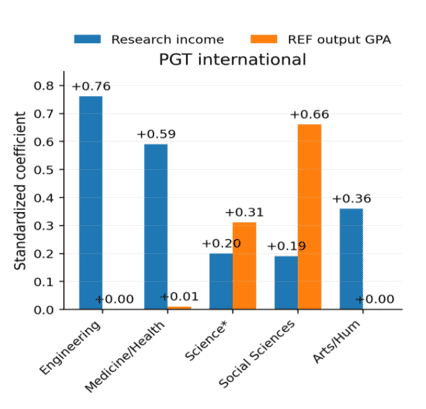
UK universities face a £6.18bn research deficit, with only 66.6% of full economic costs recovered. While cutting research may seem an obvious response, analysis of 16 research-intensive universities suggests this could damage international student recruitment. The relationship varies by discipline: in engineering and medicine, research income drives recruitment, while in social sciences, publication quality is the stronger signal — with one REF ranking place associated with roughly £13m in additional annual international fee income.
WEEKEND READING: Free speech, free labour and emeritus professors
The UK's Office for Students launched a free speech complaints scheme covering all former staff, but its press release specifically highlighted emeritus professors, prompting discussion about their ambiguous status. Emeritus titles are honorary with no employment rights, yet professors often expect continued library, email, and research facility access. Universities benefit from essentially free academic labour in return. Authors argue institutions should replace the informal arrangement with formal, time-limited contracts clarifying mutual obligations, or consider abandoning the title entirely.

Every student needs a minimum AI requirement
Matched: Artificial Intelligence, generative AI
A mathematics teacher writing for HEPI argues universities should treat AI literacy as an equality issue, not optional enrichment. While 95% of undergraduates use AI, only 48% feel staff are helping them develop relevant skills, and social-grade gaps persist. The author proposes a minimum first-term AI entitlement covering tool access, discipline-specific verification training, low-stakes practice, and clear assessment rules, suggesting this be embedded in existing access and participation plans.
What Shapes Student Engagement in Higher Education Today?
Matched: AI
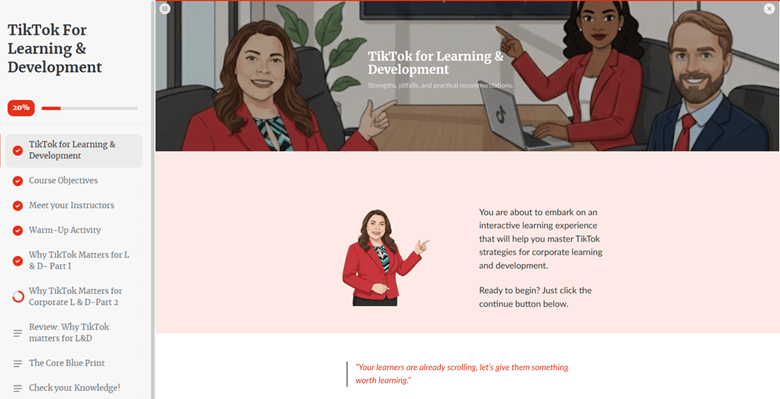
Student engagement in higher education goes beyond attendance or participation. It develops when learners understand why content matters, can actively apply knowledge, and feel supported throughout. Real-world relevance, clear outcomes, and purposeful interaction help build that connection. Flexibility aids access but requires structure and visible instructor presence to prevent disconnection. Technology can support engagement, but thoughtful teaching decisions remain central to creating meaningful learning experiences.

Would You Hire a Ph.D. Who Wrote Their Dissertation With AI?
Matched: AI
A new working paper found AI writing tools appearing in nearly one-third of STEM doctoral dissertations filed between January and May of this year, raising questions about whether employers and academic institutions should be concerned about hiring PhD graduates who used AI to help write their dissertations.
Technology Officers Navigating ‘Age of Perpetual Change’
Matched: Artificial Intelligence
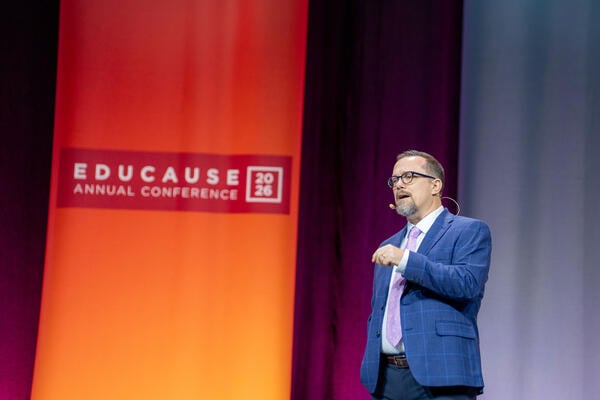
Chief technology officers at colleges and universities say determining where AI adds genuine value and preparing students for an unstable future are their top priorities, according to new research. The findings reflect what technology leaders describe as an era of constant, accelerating change that requires ongoing adaptation in both institutional strategy and student preparation.

Most Academics Haven't Used AI to Write but Think Limited Use Is OK, Chronicle Survey Finds
Matched: AI
A Chronicle of Higher Education survey found most academics have not used AI to write their work, but many consider limited use acceptable. Opinions on what constitutes appropriate use varied across disciplines. The findings reflect ongoing uncertainty within higher education about where to draw boundaries around AI assistance in academic writing and research.

Higher Ed’s Path to Advanced Cybersecurity Maturity
Matched: AI
Higher education IT leaders are urged to move beyond reactive cybersecurity toward structured maturity, using frameworks like NIST's Cybersecurity Framework and FINRA guidance adapted for colleges and universities. Key priorities include zero-trust implementation, scalable and resilient systems, and audit readiness — balancing stronger security with the agility and cost-efficiency that academic institutions require.

Finding the Right Disaster Recovery Strategy for Higher Ed
Matched: AI
Higher education institutions are prioritizing disaster recovery as cyberattacks and unplanned downtime threaten operations. Immutable backups are now considered essential, not optional. However, cost concerns and limited IT staff capacity remain barriers. A Veeam survey found 92% of IT professionals want backup solutions better tailored to their needs, highlighting a gap between the importance institutions place on disaster recovery and their ability to implement effective strategies.

‘Who’s looking after the researchers?’ The missing conversation in research culture
Matched: AI
Researchers studying difficult topics like domestic abuse, poverty, and trauma face significant emotional burdens that universities rarely address. A Warwick project found many researchers carry distressing experiences beyond working hours, yet receive little preparation for this. Early career researchers often fear admitting struggles. The authors argue researcher wellbeing should be embedded in ethics processes, training, and institutional strategy — not treated as optional.