
Filtered by tag: higher education × Clear

e-Literacy and Changing Times: Emerging Themes for Learning Impact
Matched: AI
1EdTech CSO Michael Feldstein and Claude Opus discuss why standards bodies matter beyond technical specs. Using Conway's Law—that software reflects the communication structures that produced it—they argue EdTech's failures stem from broken collaboration, not bad intentions. They explore how 1EdTech is shifting toward convening broader conversations around AI, competency standards, learner records, and global interoperability, treating community dialogue as upstream of any specification.

The Missing Pieces of the Skills Economy are the Skills and the Economy
Matched: AI
The "skills economy" is gaining momentum due to AI, rising college costs, and shifting labor markets, but lacks a shared definition. Skills aren't fixed widgets in a taxonomy — their value is contextual and changes over time. Three distinct meanings of "skill" (economic value, institutional accountability, and foundational learning components) are routinely conflated. What's missing isn't better skill definitions but infrastructure allowing two parties to assess whether a skills match justifies a transaction, supported by portable, evidence-backed credentials.

College students are writing with AI – but a pilot study finds they’re not simply letting it write for them
Matched: AI, Artificial Intelligence
A pilot study at Kennesaw State University used think-aloud protocols and screen recordings to observe how 20 undergraduates actually used AI while writing, rather than relying on surveys or finished papers. Researchers left the room to reduce self-conscious behavior. Students typically used AI for brainstorming and overcoming writer's block, but frequently edited or rejected its output, maintaining control over argument and voice. The findings suggest AI functions more as a collaborative tool than a ghostwriter, though researchers caution the small sample limits broader conclusions.

Generative AI in business schools: friend or foe?
Matched: AI, Artificial Intelligence
A UK study of 15 business graduates found students use ChatGPT routinely for drafting, summarising, and overcoming writer's block, but harbour nuanced concerns. Key tensions include unequal access to premium AI tools versus AI's potential to support students with disabilities or language barriers, and inconsistent institutional rules creating anxiety around academic integrity. Students also fear employers may undervalue their degrees as "AI-generated." Researchers recommend clearer guidelines, process-focused assessments, and equitable access to AI tools.

A writing professor’s new task in the age of AI: Teaching students when to struggle
Matched: AI
A writing professor describes navigating AI in higher education, neither banning it nor embracing it uncritically. Early classroom experiments revealed AI's errors and biases. Over time, she shifted from neutral observer to guide, asking students to write without AI so they can understand their own thinking first. Research shows AI use can improve short-term scores while hindering deeper learning. Her approach focuses on building student judgment about when AI helps versus when it undermines genuine intellectual development.

Colleges face a choice: Try to shape AI’s impact on learning, or be redefined by it
Matched: AI, Artificial Intelligence
Colleges are grappling with how AI reshapes education beyond just plagiarism concerns. Most institutions leave AI policy to individual professors rather than adopting campus-wide rules. Faculty have shifted from banning AI to guiding its use, with some redesigning assessments to include oral exams and live debates. Without coordinated institutional strategies, educators warn AI may quietly redefine what counts as learning.

The greatest risk of AI in higher education isn’t cheating – it’s the erosion of learning itself
Matched: AI, Artificial Intelligence
The real danger of AI in higher education isn't cheating but the erosion of learning itself, argue researchers from UMass Boston. As AI handles more teaching, research, and administrative tasks, universities risk hollowing out the mentorship pipelines and productive struggles that build genuine expertise. From automated advising to agentic research tools, the shift raises questions about transparency, accountability, and whether universities remain ecosystems that form human judgment or merely credential factories.

Exit Ticket Ideas To End Class With Impact and Insight
Matched: AI
Exit tickets are brief, low-stakes written responses students complete before leaving class, helping instructors gauge understanding and adjust future lessons. Common formats include the Minute Paper (key takeaways plus lingering questions), Muddiest Point (what was least understood), and the 3-2-1 Reflection (three things learned, two interesting ideas, one question). Digital tools like Google Forms streamline collection and analysis. The resulting data helps teachers identify knowledge gaps and differentiate instruction.
Top Hat and Wiley Partner to Enhance Student Engagement in Psychology and Anatomy & Physiology
Matched: AI
Top Hat and Wiley have announced a partnership integrating select Wiley Psychology and Anatomy & Physiology textbooks into Top Hat's student engagement platform. Educators can customize content, use interactive tools, and access real-time student performance data. Top Hat's AI assistant, Ace, can generate discussion prompts and practice questions tied to readings. Both companies aim to make course materials more flexible and personalized for higher education.
UW–Madison Saves Students $1M Annually While Scaling Active Learning with Top Hat
Matched: AI
UW–Madison's enterprise license agreement with student engagement platform Top Hat has saved students over $1 million annually by eliminating usage costs. Since the 2022 deal, platform adoption has more than doubled, with course usage up 30% in the past year. Surveys show 94% of students want instructors to use Top Hat again, and 85% report feeling more engaged. The university credits removed cost barriers and faculty support for driving rapid expansion of active learning practices.
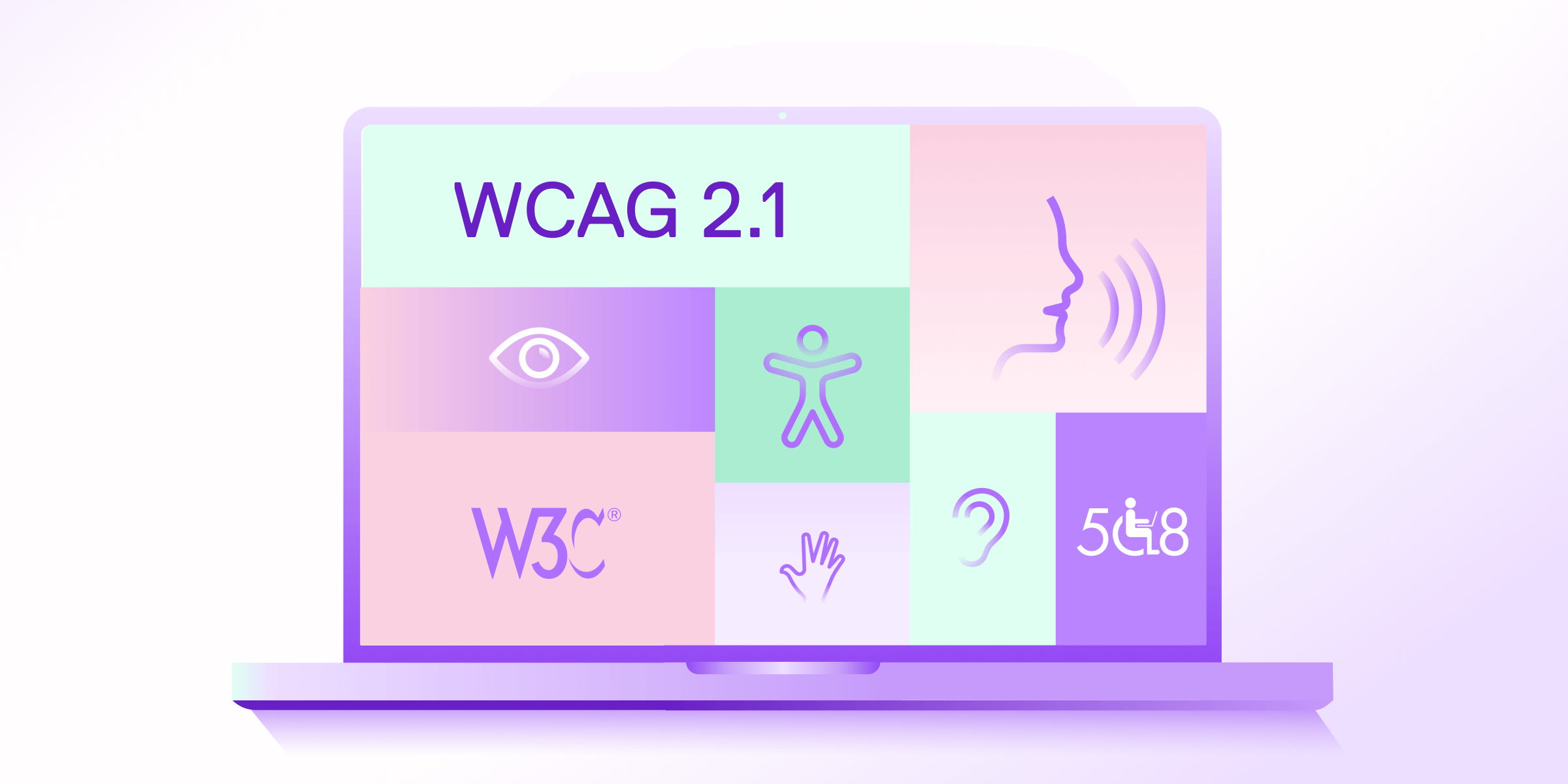
A Guide to Accessibility (for Educators)
Matched: AI
With a DOJ deadline of April 24, 2026 requiring accessible digital tools, Top Hat has published a plain-language accessibility guide for educators. It emphasizes that while accessibility requires effort, the basics are manageable. The guide focuses on WCAG 2.1 Level AA — the dominant US and Canadian standard — and covers both software platforms and course content like slides, documents, and images.

21 Interactive Classroom Activities for College Students
Matched: AI
Two college instructors share strategies for boosting student engagement through interactive classroom activities. Suggestions include open-ended questions, peer critique exercises, student-led review sessions using a passed "microphone," YouTube video discussions, and close reading. Additional techniques cover brainwriting, concept mapping, debates, flipped classrooms, moral dilemmas, Socratic seminars, and project-based learning. The instructors emphasize that greater student participation builds ownership and improves outcomes.

Student cheating dominates talk of generative AI in higher ed, but universities and tech companies face ethical issues too
Matched: AI, Artificial Intelligence
Debates about AI in higher education focus mainly on student cheating, but broader ethical issues deserve attention. These include tech companies training AI models on copyrighted material, student data privacy under vendor agreements, and unequal access to AI tools. Experts argue responsibility shouldn't fall solely on students — universities should vet AI tools, disclose vendor terms transparently, and update academic integrity policies, while tech companies must address their own ethical violations.
Top Hat Unveils AI-Powered Content Enhancer to Accelerate Title II Accessibility Compliance in Higher Ed
Matched: AI
Top Hat launched Ace Content Enhancer, an AI tool helping college educators meet WCAG 2.1 AA accessibility standards required under the DOJ's 2024 Title II ruling, with compliance deadlines starting April 2026. The tool scans course materials, flags issues, generates alt-text, and suggests improvements. Top Hat says thousands of faculty at over 1,500 North American institutions use its platform.

Why higher ed’s AI rush could put corporate interests over public service and independence
Matched: AI, Artificial Intelligence
Universities are rapidly forming corporate AI partnerships — with Nvidia, Microsoft, OpenAI and others — raising concerns about higher education's independence and public mission. Decades of corporatization have already shifted universities toward market-driven priorities, and AI is accelerating this trend. Financial pressures, enrollment declines, and competition for prestige may push institutions to prioritize commercial interests over academic freedom, public-good research, and democratic faculty governance.
Digital Credentials, Workforce, and AI
Matched: AI
Chief Strategy Officer at 1EdTech shares evolving views on digital credentials after a year in the role. Key points: existing standards (Open Badges 3, CLR) already support most workforce credential needs; digital credentials are gaining real traction globally despite skepticism; the "LER" concept remains poorly defined while the downstream LER-RS résumé standard is clearer; and AI will lower costs on both supply and demand sides, shifting credential value from issuer reputation toward verifiable proof of skills.

At one elite college, over 80% of students now use AI – but it’s not all about outsourcing their work
Matched: AI, Artificial Intelligence
A Middlebury College survey of 634 students found over 80% use generative AI for coursework, with most using it to enhance learning rather than cheat. Students most commonly used AI to explain concepts, describing it as an on-demand tutor. While 42% used AI for automation tasks like essay writing, this typically occurred during high-pressure periods or for low-stakes work. Findings were consistent with global data and verified against Anthropic's actual usage logs.
Top Hat and the First Nations Caring Society Award 2025 Shannen’s Dream Scholarships
Matched: AI
Top Hat and the First Nations Child & Family Caring Society have announced the 2025 Shannen's Dream Scholarship recipients. Top Hat funded two $10,000 and two $5,500 scholarships for First Nations post-secondary students demonstrating academic excellence and community leadership. The four recipients are Zoe Quill, Mercedes Stemm, Syndel Thomas Kozar, and Ruby O'Tennadzahe. Each recipient must complete a "pay-it-forward" contribution to a First Nations education initiative.
Blursday Socials Are Reborn! First One on Thursday, July 31st
Matched: AI
Blursday Socials are returning as 1EdTech Learning Impact Labs Live (LIL Live), hosted on Engageli. The first session runs Thursday, July 31st, 11:30 AM–12:30 PM ET. Guest Unizin CEO Bart Pursel will present two proposals: creating cross-platform standards for interleaving teaching practices, and tools to analyze how course design affects students changing majors. No pre-registration required; attendees join via link on the day.

Generative AI is coming to the workplace, so I designed a business technology class with AI baked in
Matched: AI, Artificial Intelligence
A University of Wisconsin-Stout professor integrated Microsoft 365 Copilot into a senior business technology capstone course, having students explore the tool freely and journal their experiences. Students quickly grew comfortable using AI to summarize meetings, draft slides, and review assignments, but struggled initially with writing effective prompts and encountered AI hallucinations, reinforcing the need for fact-checking. The instructor noted AI requires more critical reflection than standard software and plans to embed generative AI across more courses, emphasizing literacy over reliance.
EEP at 1EdTech Learning Impact: Solving the Right Problems
Matched: AI
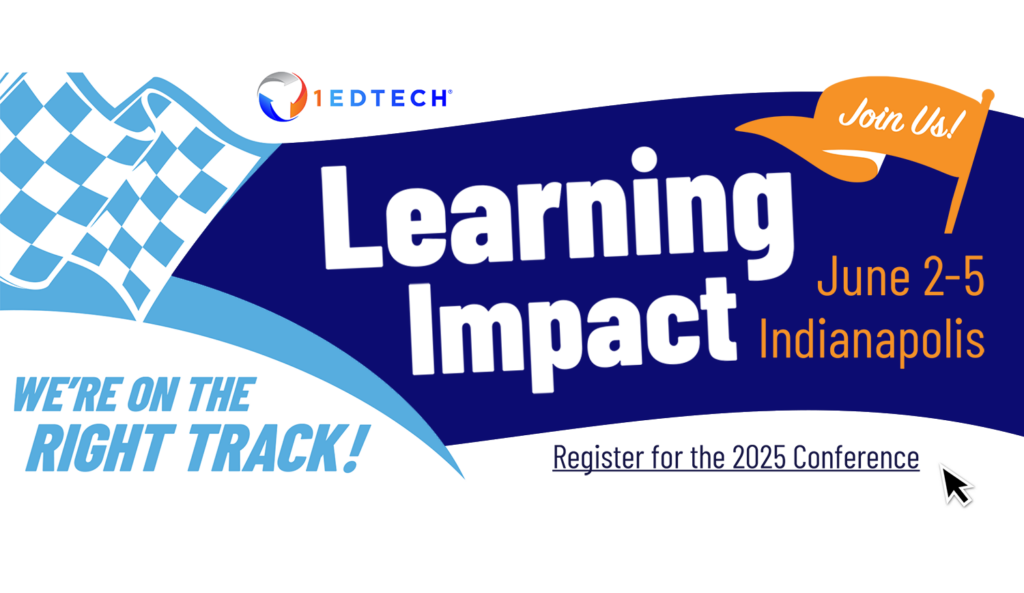
The Empirical Educator Project (EEP) has joined 1EdTech and is inviting educators, researchers, and EdTech professionals to collaborate at the Learning Impact conference in Indianapolis in early June. An EEP mini-conference on June 2 will feature speakers proposing ideas for high-impact work. EEP will evolve into Learning Impact Labs, a broader initiative for education-focused research and proactive community-driven projects.