
Filtered by category: e-Literate, tag: artificial intelligence × Clear
Satya Nadella’s Insights on the Future of Organic Intelligence (OI)
Matched: AI
Satya Nadella argues AI will transform firms by creating a "cognitive loop" where human insight is captured and compounded into company-owned AI models. Drawing on economic theory about coordination costs, he frames this as mutually beneficial for workers and firms. However, the author notes Nadella's model risks being extractive rather than truly compounding for workers, unless systems are built to recognize individual contributions, preserve portable skills records, and invest in human development alongside AI capability.
Today’s AI is Economically Unsustainable for Education
Matched: Agentic, AI
Current AI economics are unsustainable for education. AI companies aren't yet profitable, and usage-based API costs are wildly variable — some firms have accidentally spent hundreds of millions in a month. EdTech SaaS depends on fixed costs to fit institutional budgets; variable AI token pricing breaks that model entirely. Expect constrained AI features in platforms rather than open-ended tools, with true broad adoption likely still years away.

e-Literacy and Changing Times: Emerging Themes for Learning Impact
Matched: AI
1EdTech CSO Michael Feldstein and Claude Opus discuss why standards bodies matter beyond technical specs. Using Conway's Law—that software reflects the communication structures that produced it—they argue EdTech's failures stem from broken collaboration, not bad intentions. They explore how 1EdTech is shifting toward convening broader conversations around AI, competency standards, learner records, and global interoperability, treating community dialogue as upstream of any specification.

An Explanation of AI that Could Be Wrong (Which is Good)
Matched: AI, Artificial Intelligence
A former strategy executive and lifelong cognitive science enthusiast has published a scholarly paper arguing for a falsifiable theory of what AI actually learns during training. The paper, "Distinctions Worth Preserving," draws on decades of cross-disciplinary reading spanning philosophy, linguistics, learning science, and AI research. The author frames the work as a field-positioning argument and provides a falsification experiment. The post also offers prompting guides for using AI tools to engage with the paper.

Literally Nobody Understands AI. That’s bad.
Matched: AI, Artificial Intelligence
AI remains poorly understood even by experts — no widely accepted theory explains how it works. Models trained only on positive examples somehow learn language despite proofs suggesting that's impossible. They excel at complex tasks yet fail simple ones, like tracking who said what in a conversation. Without scientific understanding, fixes remain makeshift hacks. Economic pressure to build smaller, efficient models is now pushing researchers toward deeper explanations.

AI in Standards: A Conversation with Google and Microsoft
Matched: AI
Google and Microsoft representatives will join a 1EdTech Labs webinar to discuss AI, edtech interoperability standards, and Model Context Protocol (MCP), a standard for providing AI models with educational context. The session aims to generate collaborative experiments rather than open-ended debate, with attendees invited to share ideas and expertise. Registration is open.
AI Mindscape Prompting
Matched: AI
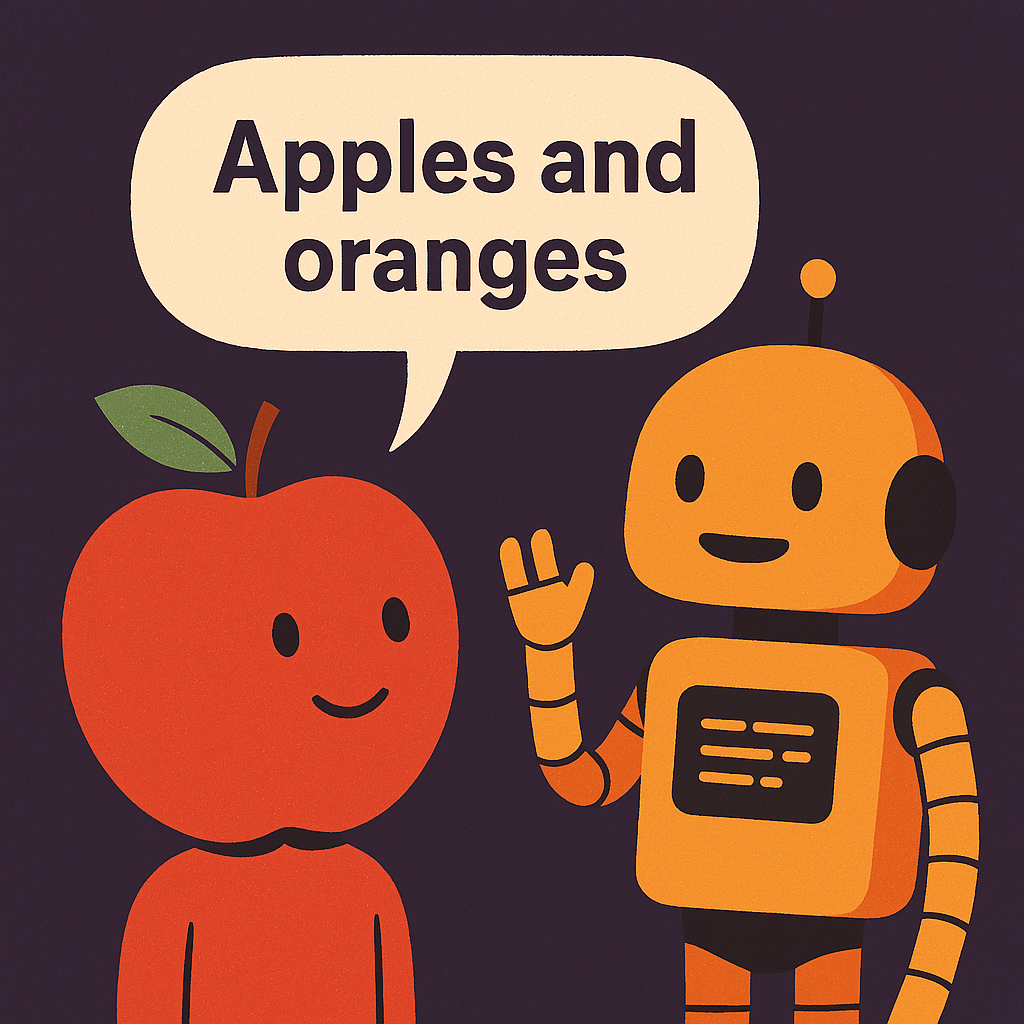
A conversation between educator Michael and Gemini AI explores how large language models actually work. Using the "apples and oranges" idiom as a framework, they discuss how AI processing resembles human cognition functionally—activating relevant knowledge based on context—while differing fundamentally in mechanism. Key insights include how prompting works as collaborative "mindscape" building rather than magic incantations, and how context windows enact distributed cognition and social constructionism concretely.